Abrewa Posoposo
Acrylic on canvas 200 x 160 cm 2025
Abrewa Posoposo
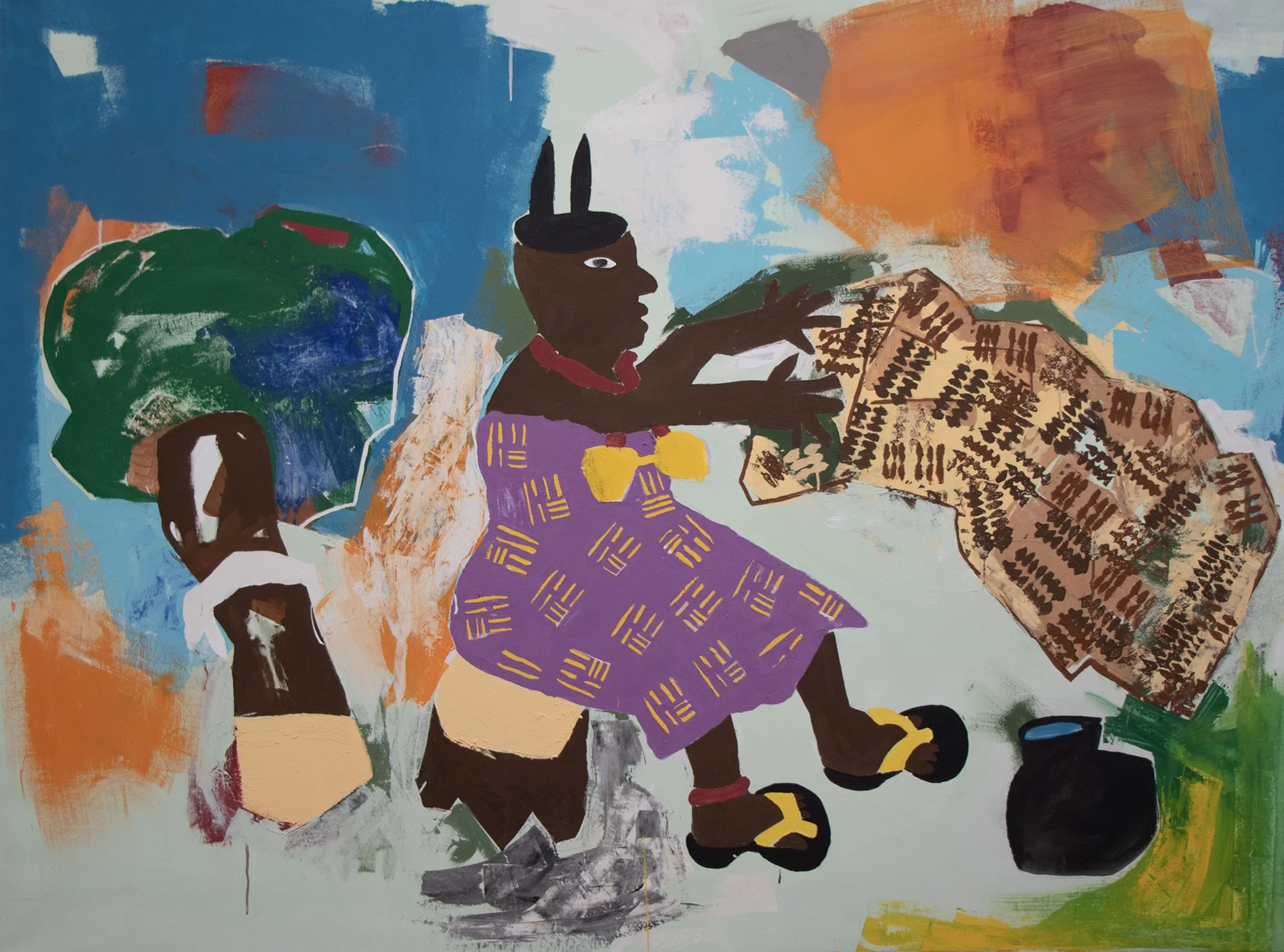
A female figure sits in the center of the canvas; she is wrapped in a vibrant Kente cloth of
purple and yellow colours. She wears an ornate coiffure and jewelry. She sits on a tree
stump. A black pot filled with water stands beside her legs and her hands are occupied
with weaving a mat. The scene of this iconic painting by Kweku Okokroko, riddled with
symbolism-rich motif, is from the Abrewa Posoposo epic. A literary work authored by
Kweku Okokroko.
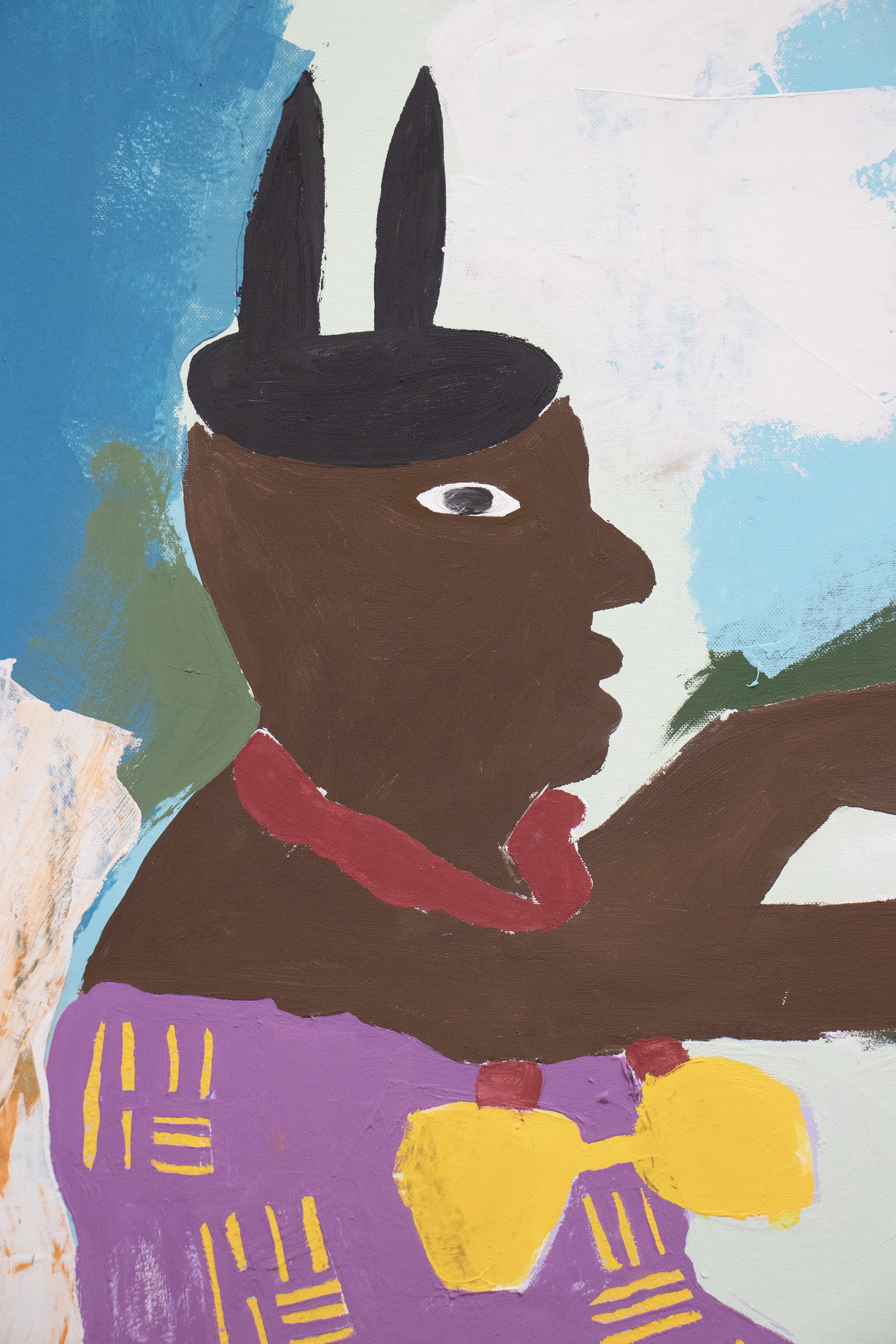
Detail of the pectoral in the painting. A double pectoral seen here is called a Mourner's pectoral (awisiado or "orphan's necklace") and are typically worn by close relatives, male or female of the deceased at funerals.
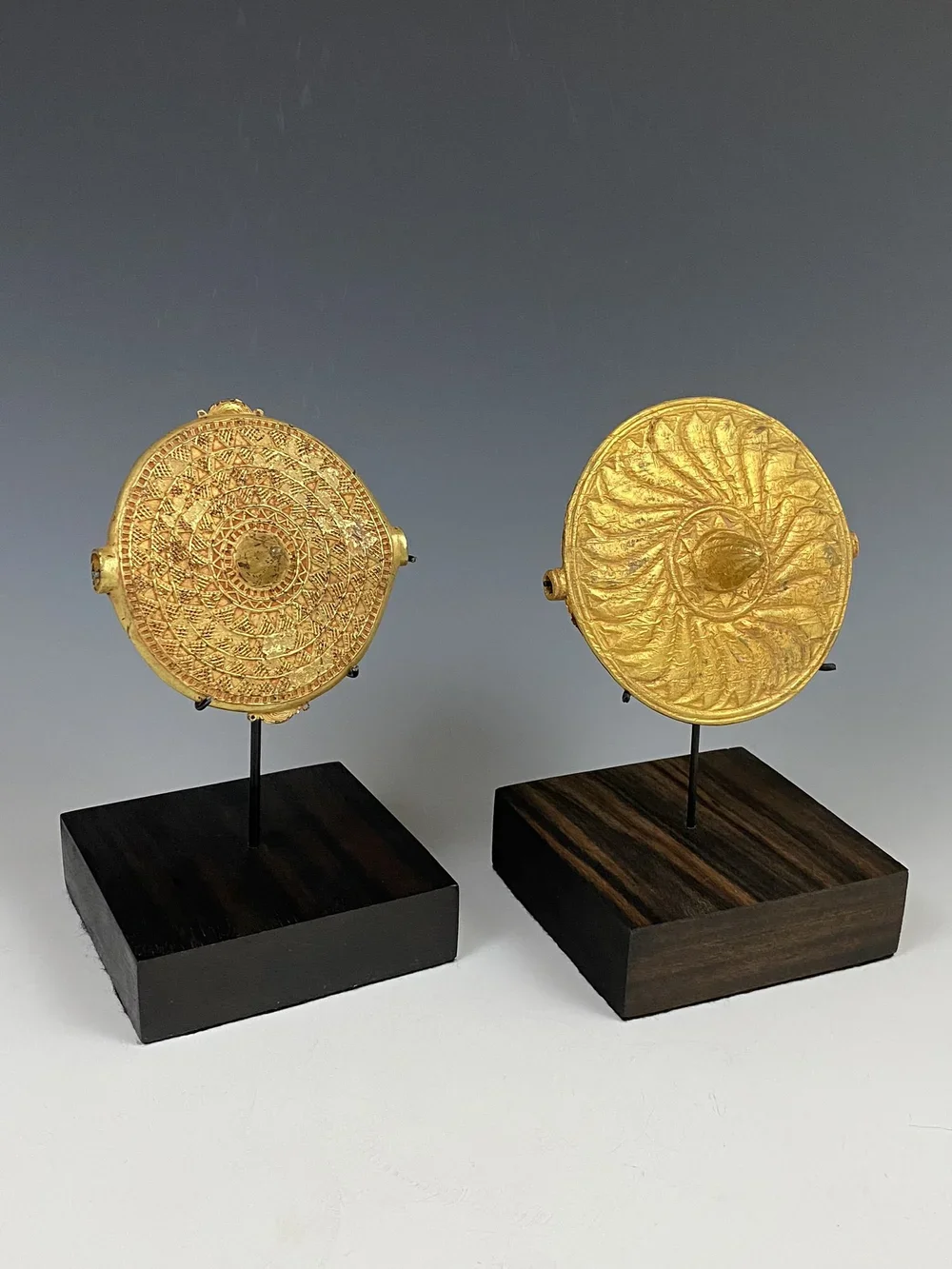
Asante Pectorals “Soul Washer’s discs” (Akrafokonmu), Ghana. Cast gold alloy (left) 12cm, and wood covered with gold foil (right) 13cm. Pectorals were worn as a sign of rank and allegiance of the royal families at the festivities. They are worn by distinguished dignitaries and are also called soul disks. The symbol of the sun also allegorically stands for the radiant soul of Asantehene (Regent of the Asante) and is supposed to protect the bearers. The bearer also protects and holds a part of the soul of the chief.
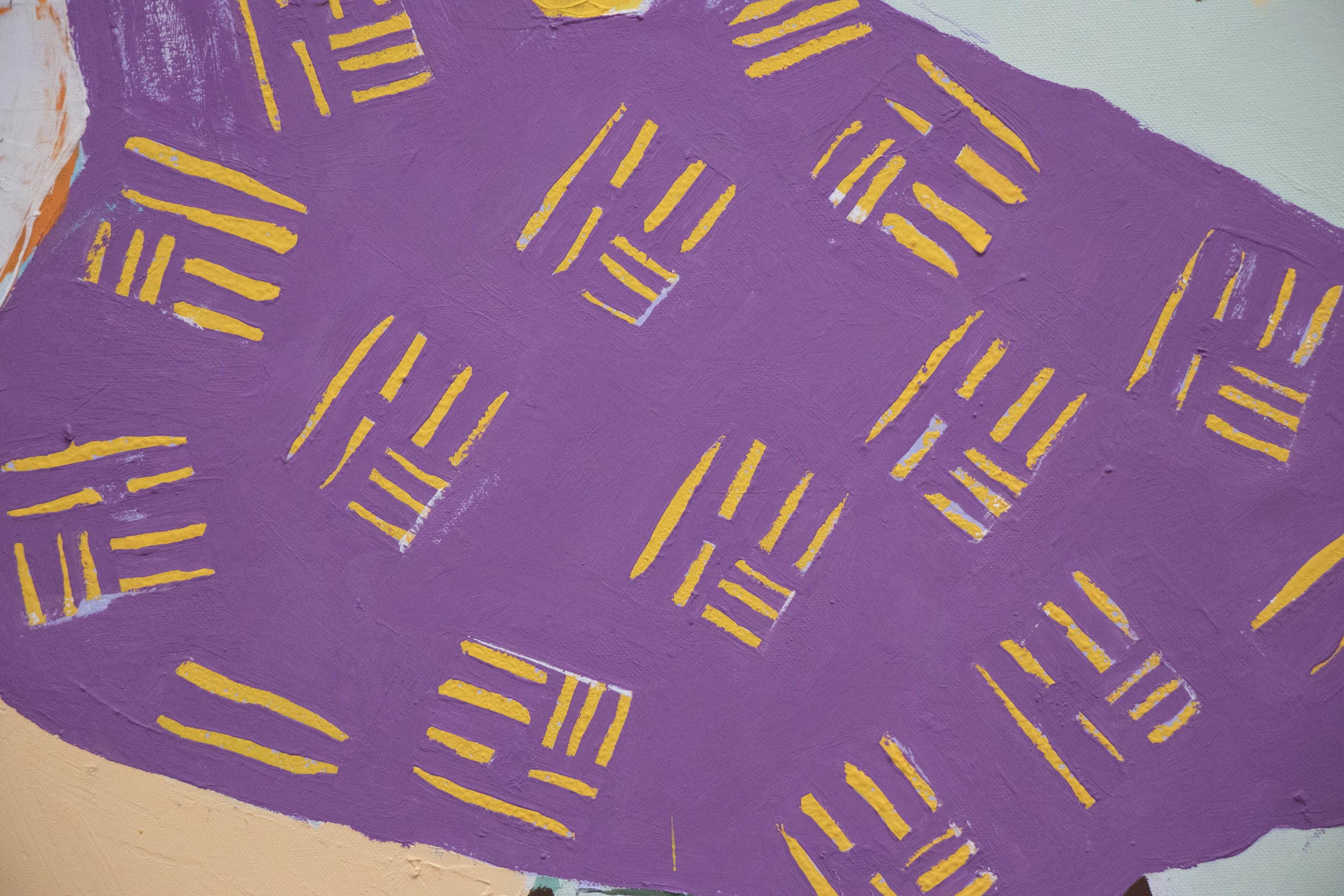
Detail of the kente cloth in the painting.
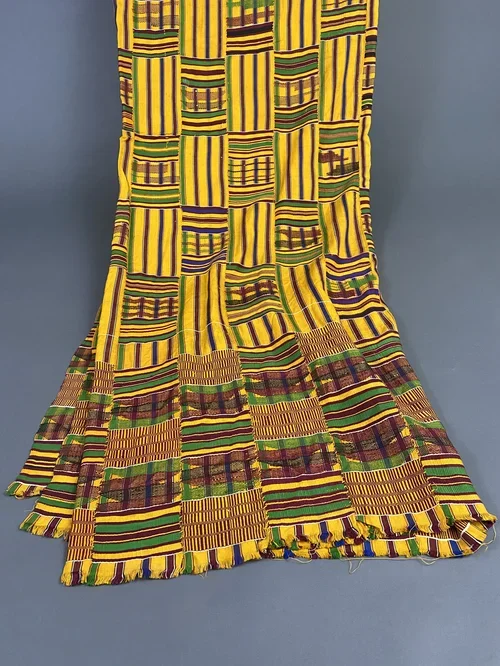
Asante Kente Cloth Textile, Early/Mid 20th C. Silk and Cotton.118'' x 80'' (300 x 203 cm) From the collection of Allan Stone, New York. Kente cloth like this example are woven on a loom in strips. The alternating patterns are carefully thought out and visualized by the weaver. Once all the strips are woven, they are then hand sewn together to form the full cloth.
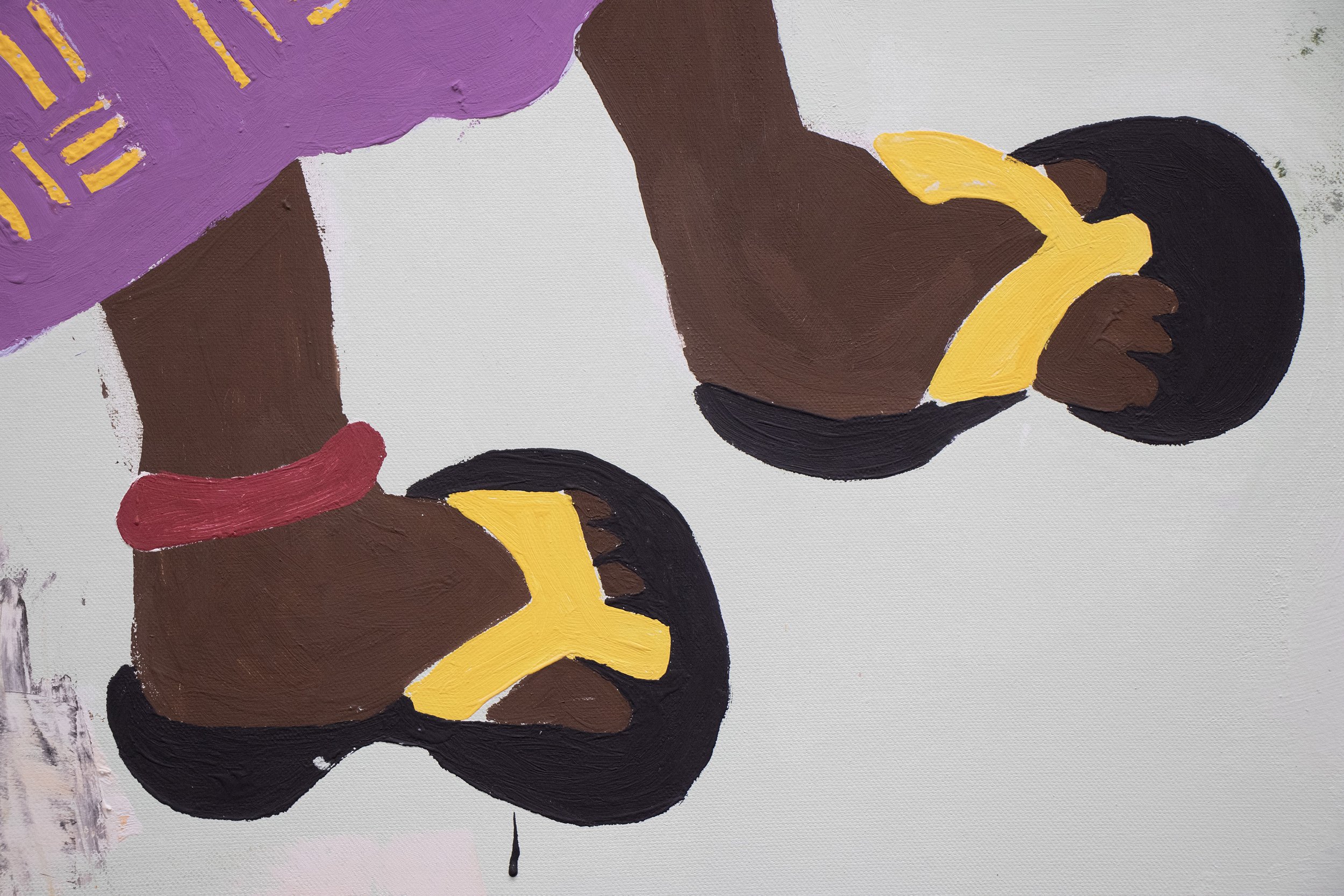
Detail of the chief sandals (mpaboa) in the painting.
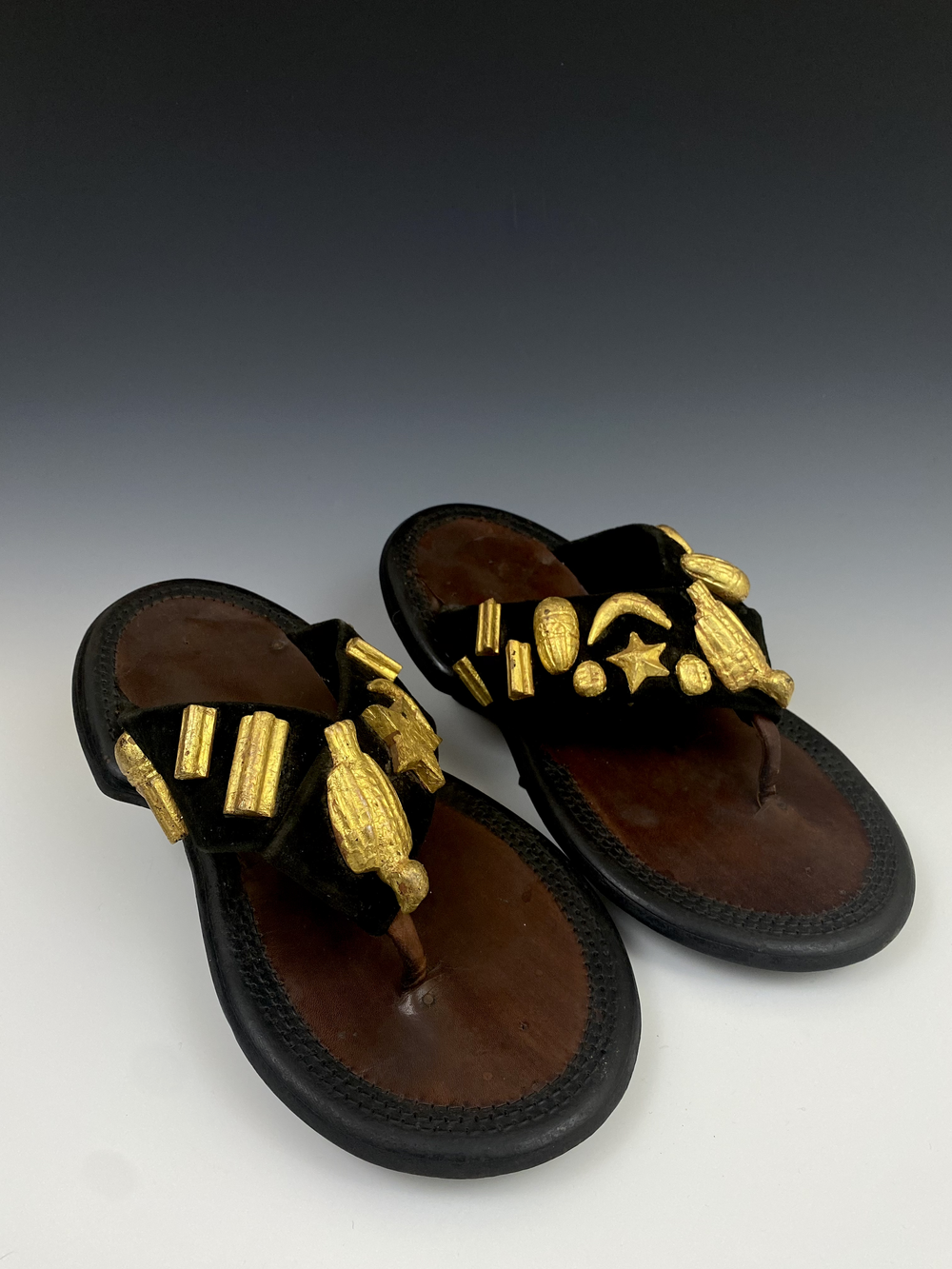
Chief sandals (mpaboa), leather, wood covered with gold foil. Ghana. Sandals are the equivalent to the European crown when identifying a ruler in the Akan states. The straps are usually covered with gold ornaments that point to proverbs and can also be seen on the abotire headbands or “crowns” of the Akan. It is most likely that the sandals came first and influenced the crowns. Here we see ornaments made of carved wood covered with gold leaf representing the night bird asantrofie (center). This bird motif addresses the dilemmas inherent in decision making, “If you take asantrofie you bring bad luck, if you leave asantrofie you lose good fortune,” a kind of “damned if you do, damned if you don’t” situation.’ (Ross). Other ornaments include fluted forms, cowrie shells, beetles, and the sun and moon motif. The fluted forms are representations of insect cocoons and are more frequently seen in cast form as gold weights. The image is meant to suggest a dilemma: “It is a puzzle to know how the caterpillar entered its cocoon; did it build it before entering it or did it build it around itself?” (Menzel 1968, 181). In other words, some things are destined to remain a mystery. The star and moon motif usually seen on abotire headbands points to a proverb recorded by Garrard: “The evening star, desirous of being married, always stays close to the moon.” He explained, “In the political context it would indicate that the people love their chief and will support him” (Ross).