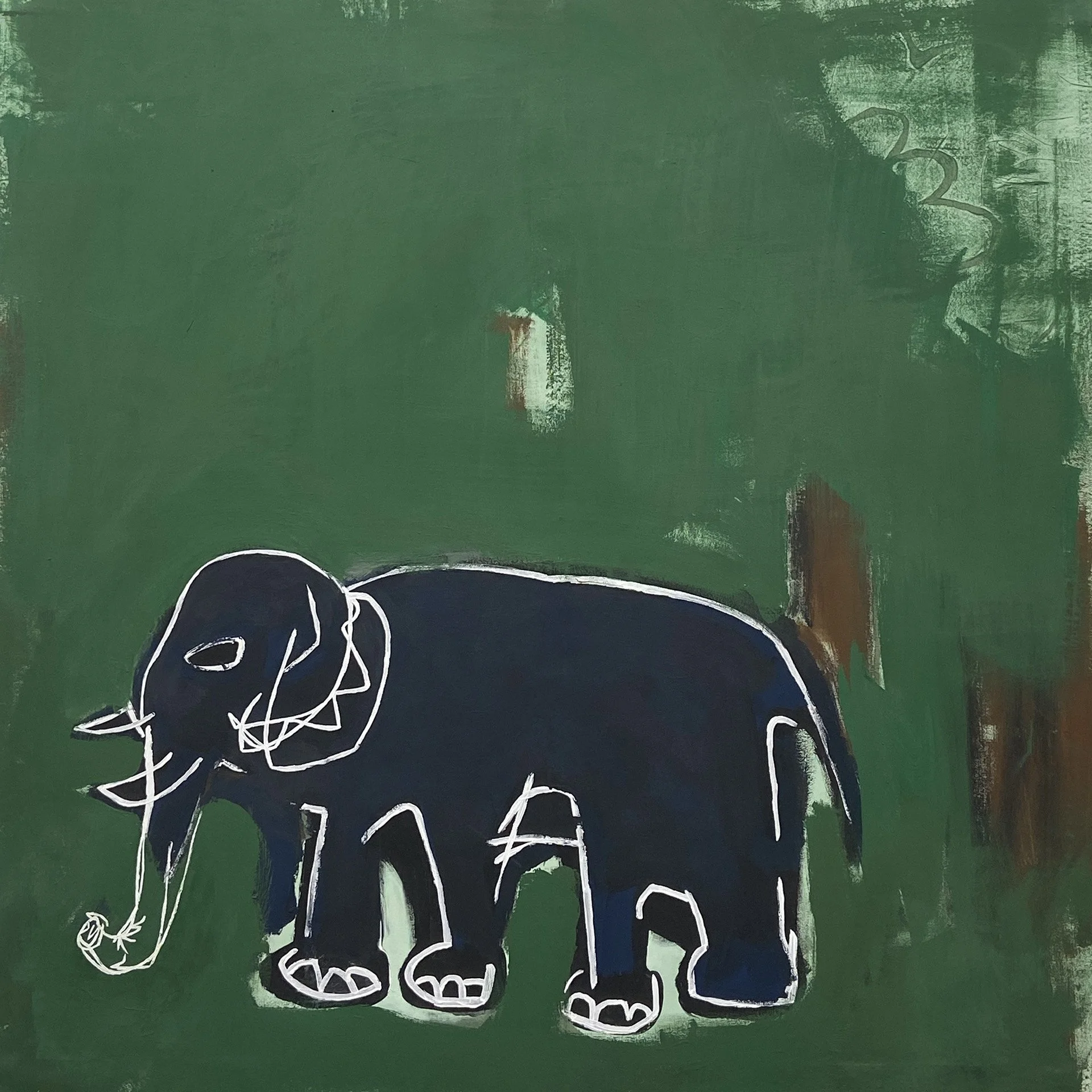
Ɔsono
Acrylic on canvas
140 x 140, 2024
An elephant of a blue-black silhouette and white contours walks towards the left. Trunk
outward, under tall trees whose leaves sway in the upper right of a green canvas. This
painting by Kweku Okokroko from the year 2024, is from a series titled MBOADOMA. A
series of animal paintings that follow in an Akan literary tradition of animals as
embodiments of virtues, principles and ideas.
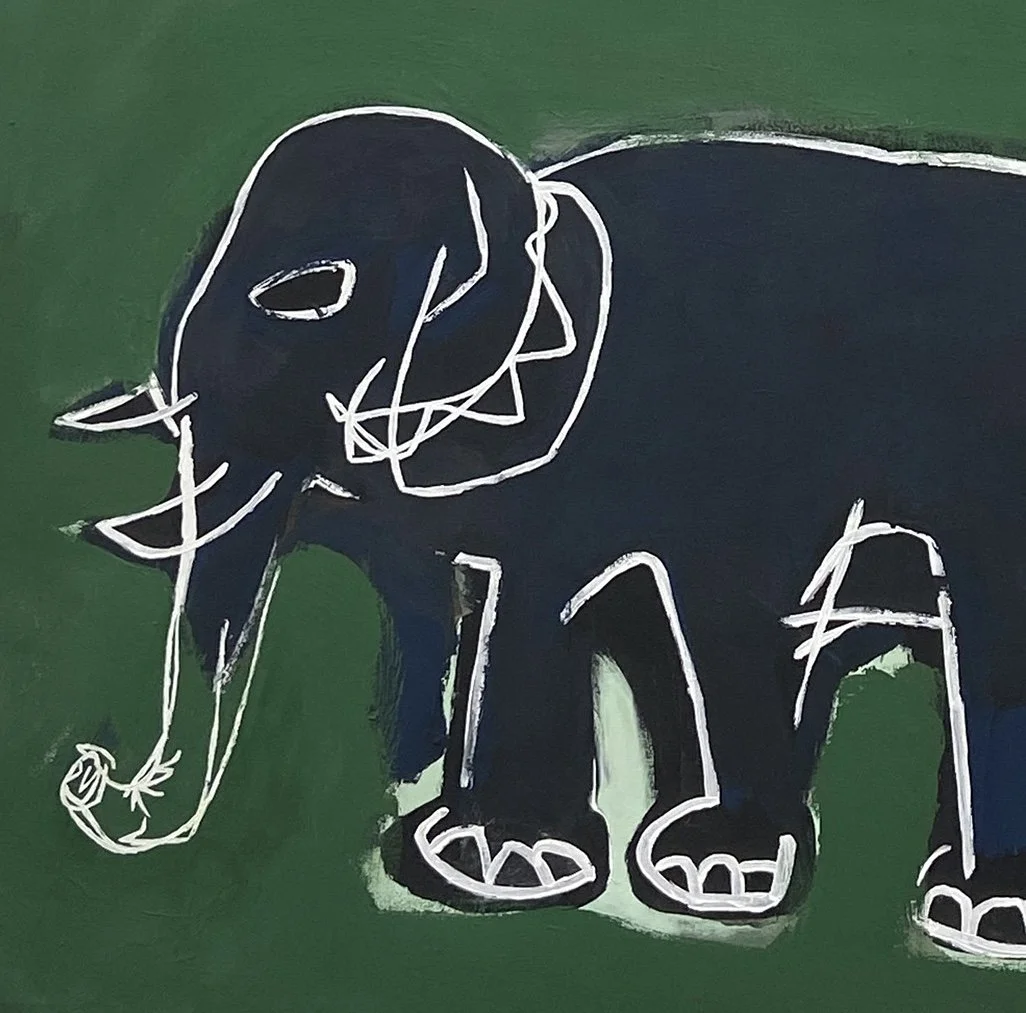
Detail of the Elephant in the painting ƆSONO. An elephant of a blue-black silhouette and white contours walks towards the left. Trunk outward, under tall trees whose leaves sway in the upper right of a green canvas.
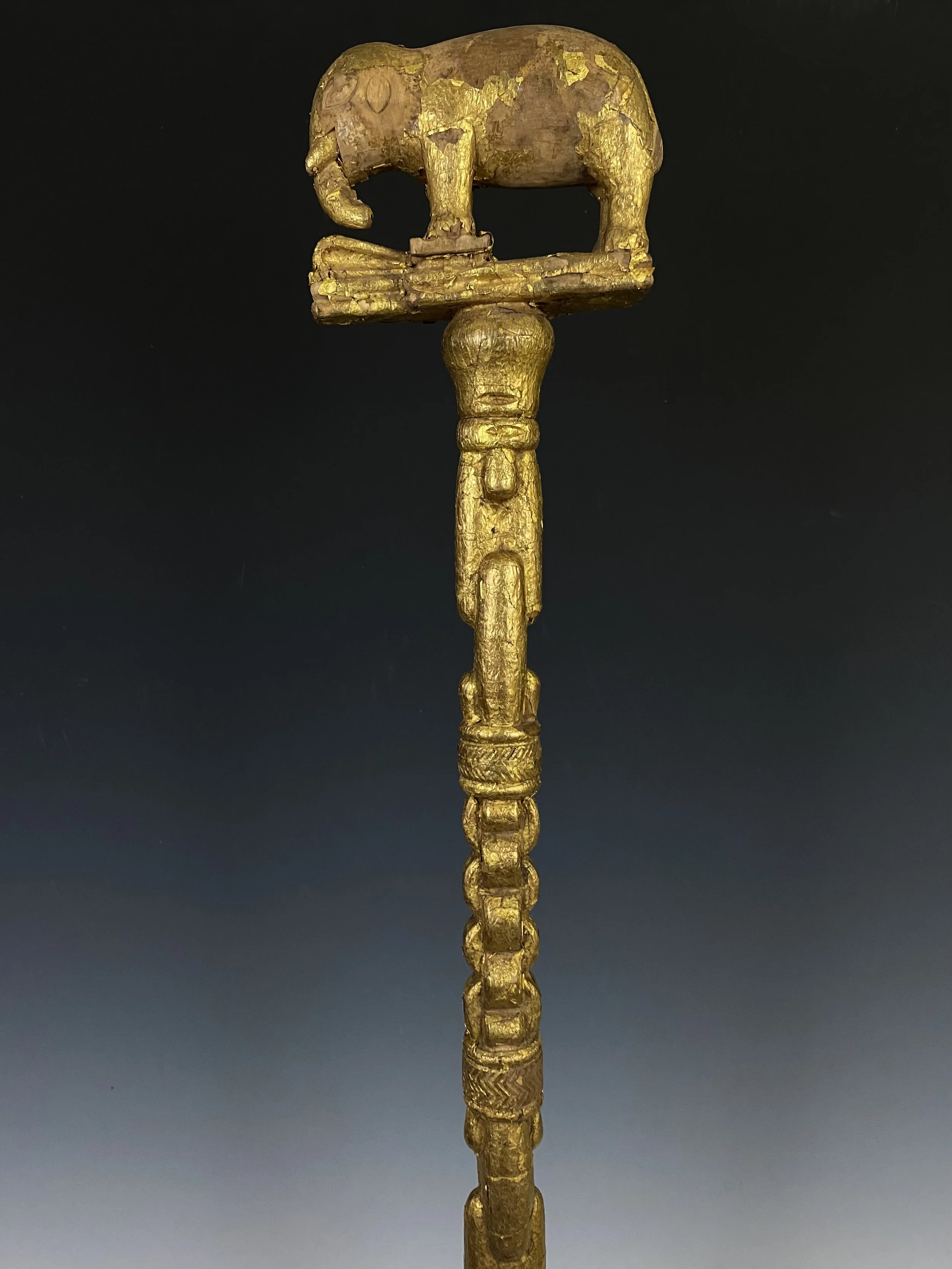
An Asante linguist/ counselor’s staff topped with a finial of an elephant stepping on a trap. Wood, covered with gold foil, Ghana. 43.5” H. The staff is too short to be complete and is most likely missing the middle section as evident in the miss matched pattern in the center transitional joint. Staffs are commonly much taller. The tusks are broken and at one point we’re much longer. Doran Ross writes “Issues of succession aside, many images in Akan regalia emphatically proclaim the power of the chief, both physically and intellectually. The staff with the chain link shaft has a finial of an elephant standing on an animal trap. Its maxim is generally translated as, "When the elephant steps on trap, it does not spring." Kojo Bonsu, with a slightly different twist on the meaning, said in English, "When elephant steps on trap, no more trap!" Also seen on the staff is the chain link. Ross explains it as “The solidity of the family and the integrity of succession are often referenced in carvings and castings of linked chains. Peggy Appiah in a 1977 communication cites the following: "If we are linked together like a chain, in life we are linked, in death we are linked. Family links are never broken." This graphically emphasizes the strength of family bonds.” Ex collection of Dr. & Mrs. John Finley.
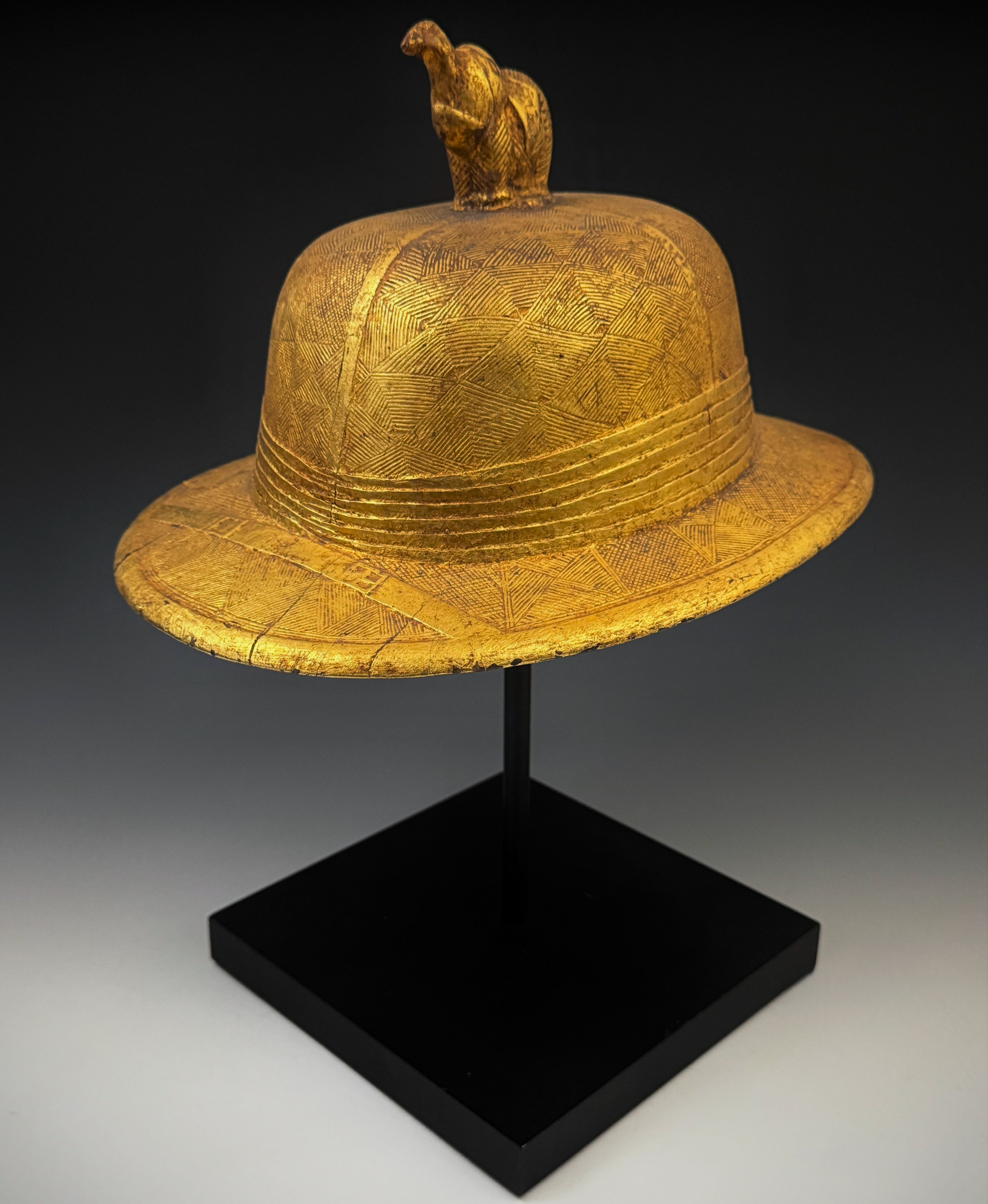
A Baule pith helmet with an elephant finial. Côte d’Ivoire. Early to mid-20th century. Carved wood, gold foil. The Baule notables appropriated images from European colonial origin associated with prestige, power, and authority. Among them are crowns and pith helmets. These skeuomorph items were worn and displayed in special functions to project rank, authority and importance. Ex estate of René David (1928-2015) Zurich.
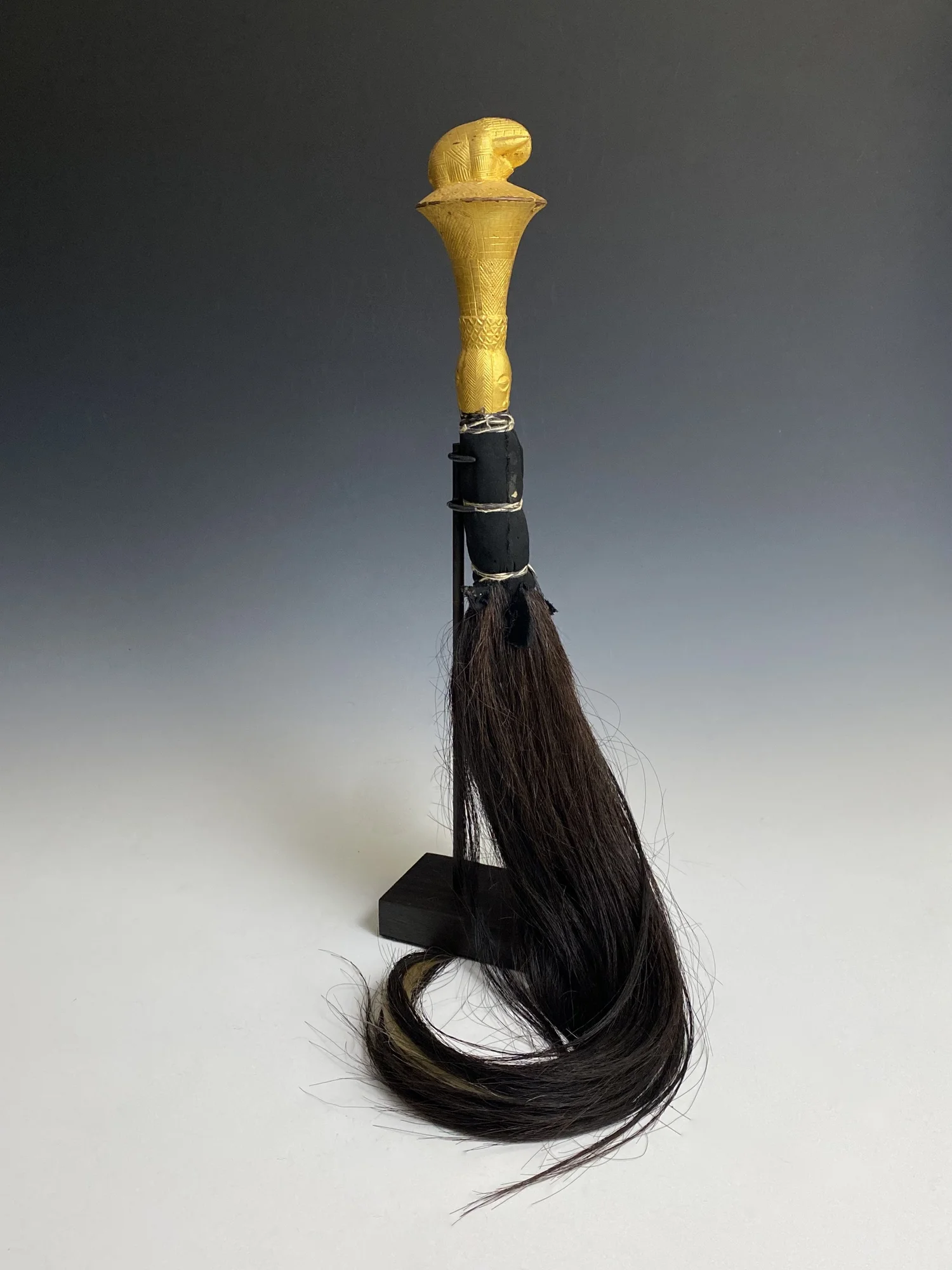
Akan Fly whisk if a notable with an elephant finial. Wood, gold foil, textile, L: 28 cm / 100 cm, L: 11,0 inch / 39,4 inch Côte d’Ivoire or Ghana. EX Zemanek Münster Germany. EX Dieter Schaffner, Groß-Gerau , Germany
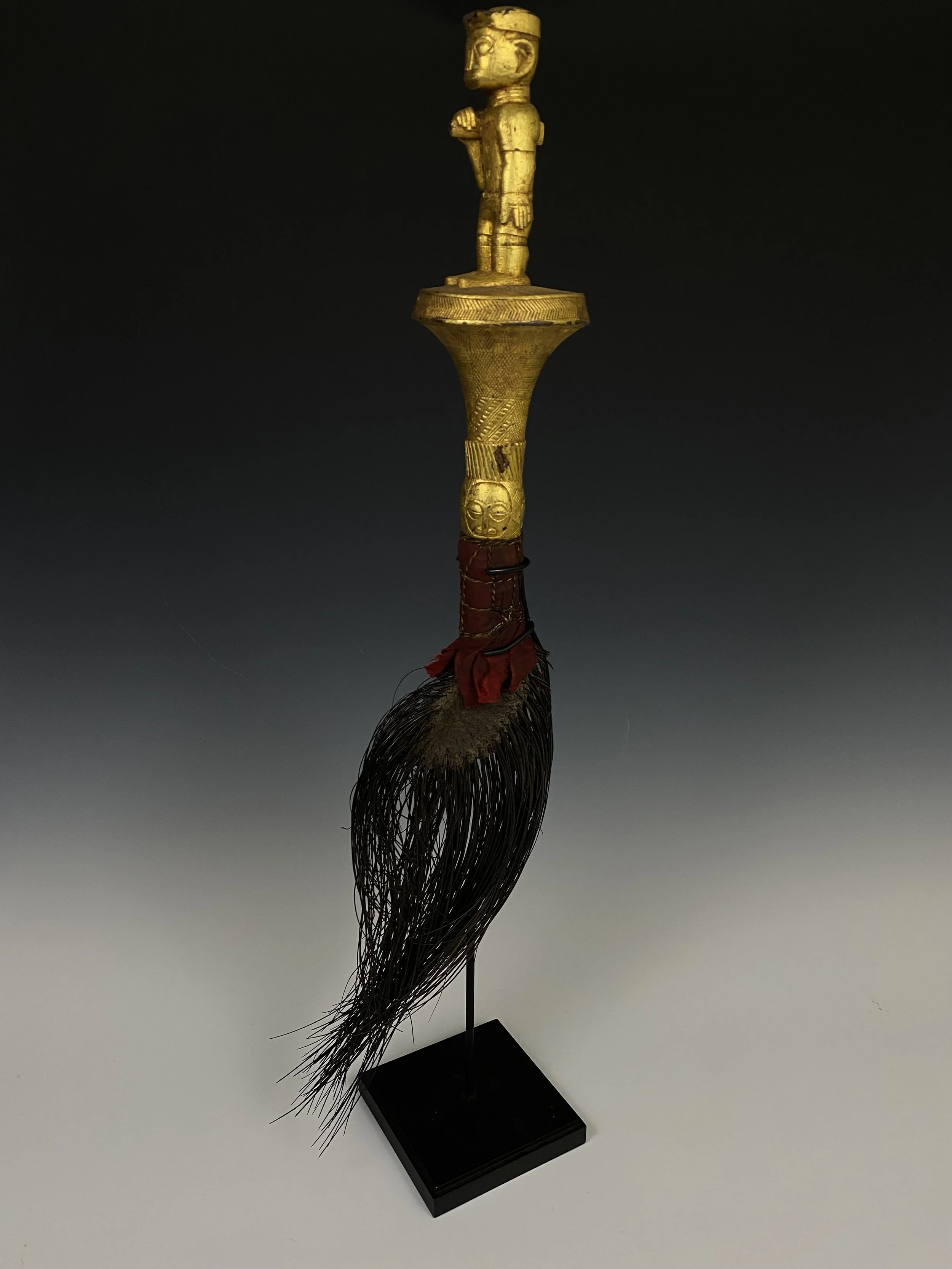
A fly whisk made of an elephant tail is known as “mena”. Wood, covered with gold foil, elephant tail/ hair, textile. H 70 cm. “At one time elephant tail fly whisks (mena) were ubiquitious in the courts of many Akan chiefs. At the Asante Odwira festival of 1817, Bowdich observed “Elephant tails waving like a small cloud.” A photograph from the 1960s, taken as part of Kyerematan’s study for The Panoply of Ghana documents twenty-three elephant tail fly whisks in the regalia at NKoranza. Traditionally the whisk was a symbol of entitlement, the “heraldic badge” earned by the ɔbirɛmpɔn (big man) and conferred by the Asantehene. This title was given to the most successful accumulators of wealth and was held by the heads of the hereditary chiefdoms. In the Asante kingdom, only the Asantehene is allowed to possess a gold-handled elephant tail. There has been substantial speculation on the relationship between wealth and the elephant tail. Wilks considers it in relation to the proverb, “The elephant’s tail is short, but it is able to sweep flies away.” He goes on to explain: The sense is that the elephant did not allow the handicap of a short tail to prevent him from achieving preeminence...thus should the citizen sweep away all obstacles in his or hers pursuit of riches. The elephant tail or mena is the symbol in other words, not so much as wealth as such, but rather of the accomplishment and achievement which characterize the acquisitive process. (Wilks 1975,15).-D.Ross. Provenance: Galerie Walu, Zurich, Switzerland
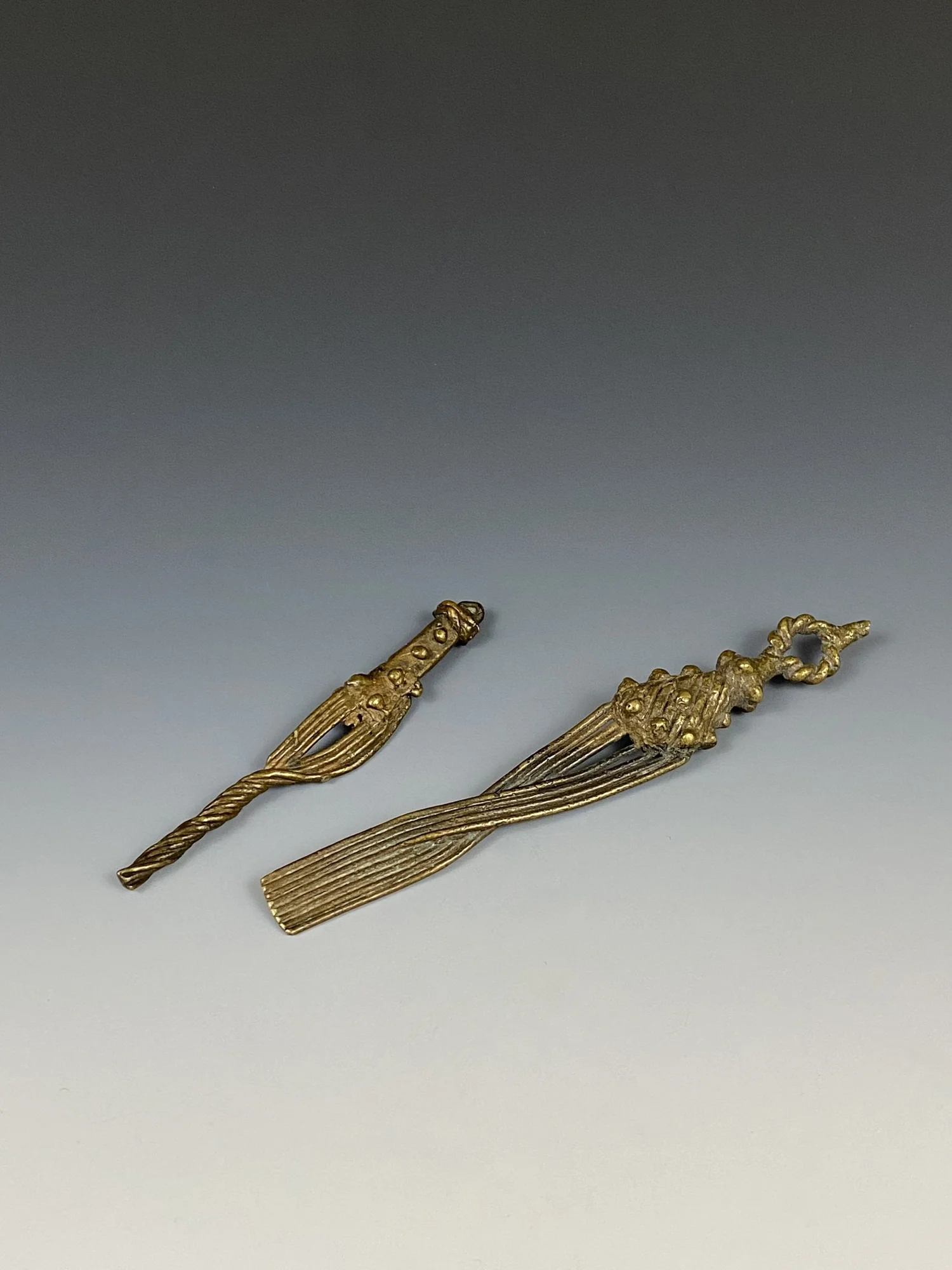
Two Asante 19th c. gold weight in the shape of a Elephant tail fly whisk (mena). Bronze.
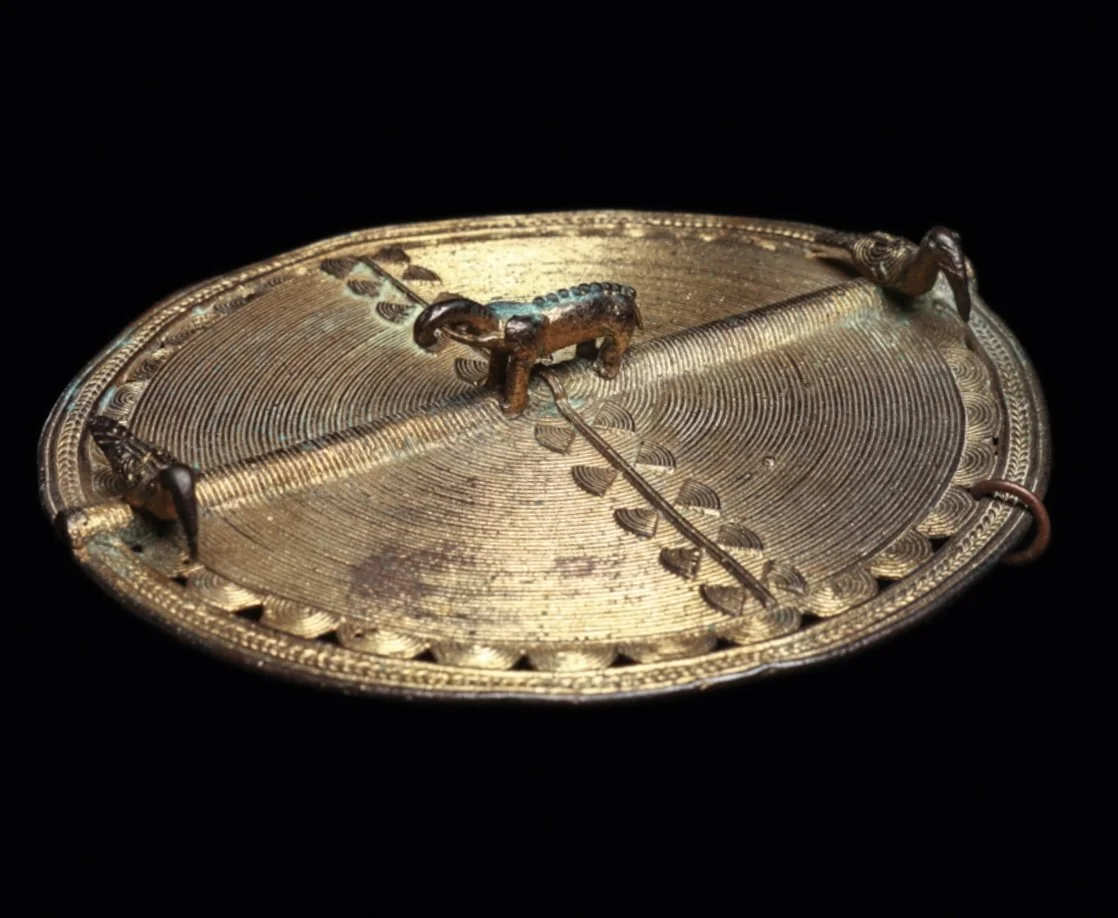
An Akan or Baule gilded copper alloy pendant with two birds and an elephant. 3.5” dia. Côte d’Ivoire, Ghana. EX Paul Tishman collection (NY) by decent. “Paul Tishman was often asked why he and his wife Ruth decided to collect African art. His simple reply: How does one fall in love?” Most of the Tishman collection was bought by the Walt Disney company in the mid 80s and in 2005, Disney donated all 525 objects in the collection to the Smithsonian National Museum of African art.
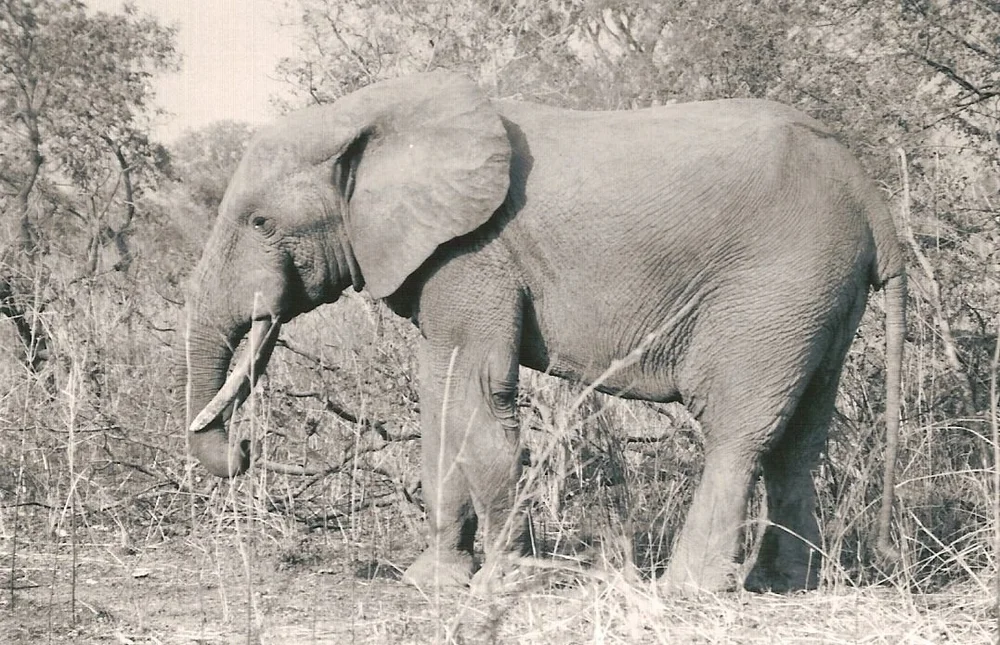
Mole National Park, Ghana 2002 (From the Mooscollection photo archives)