Nana Mensa Sukɔnoma
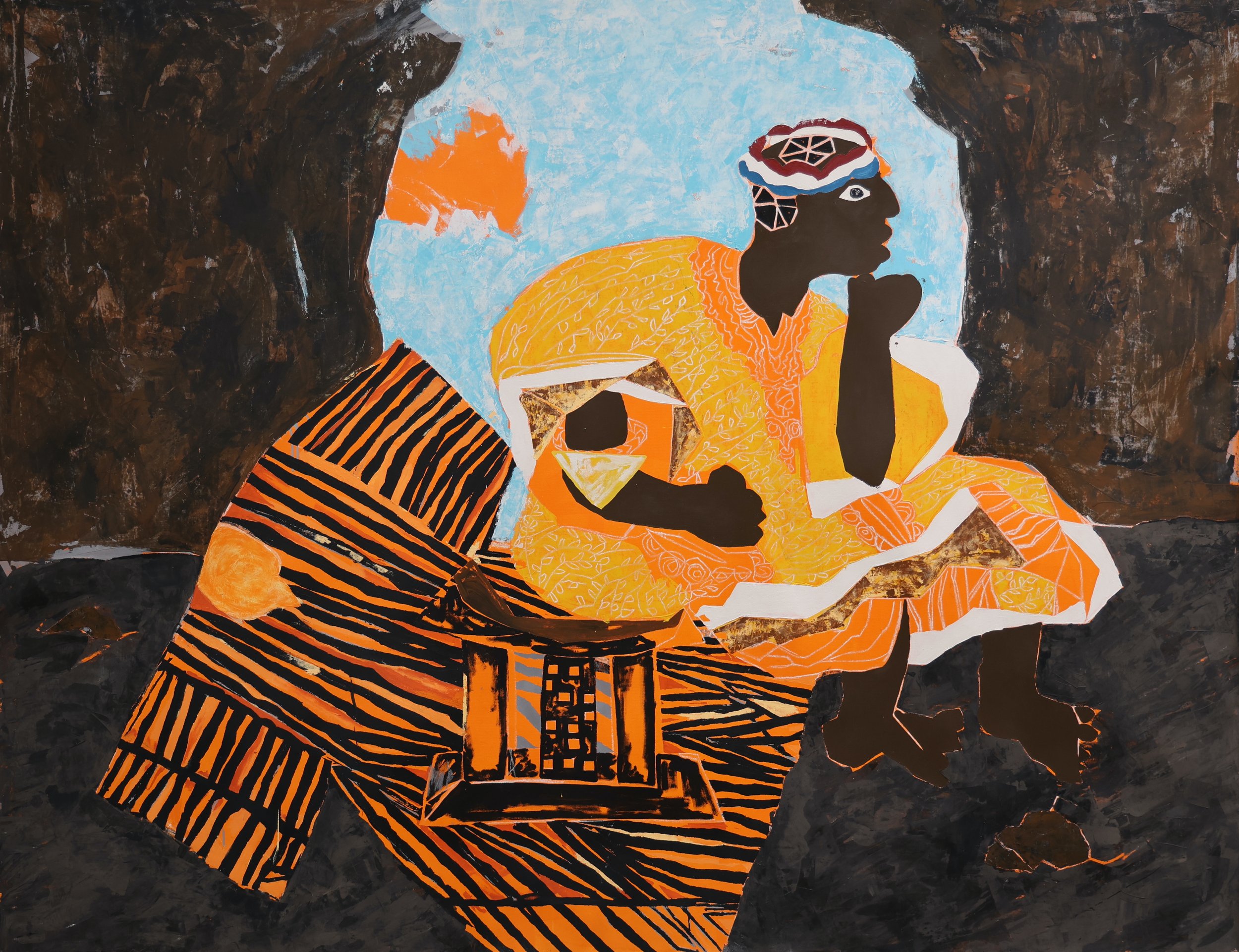
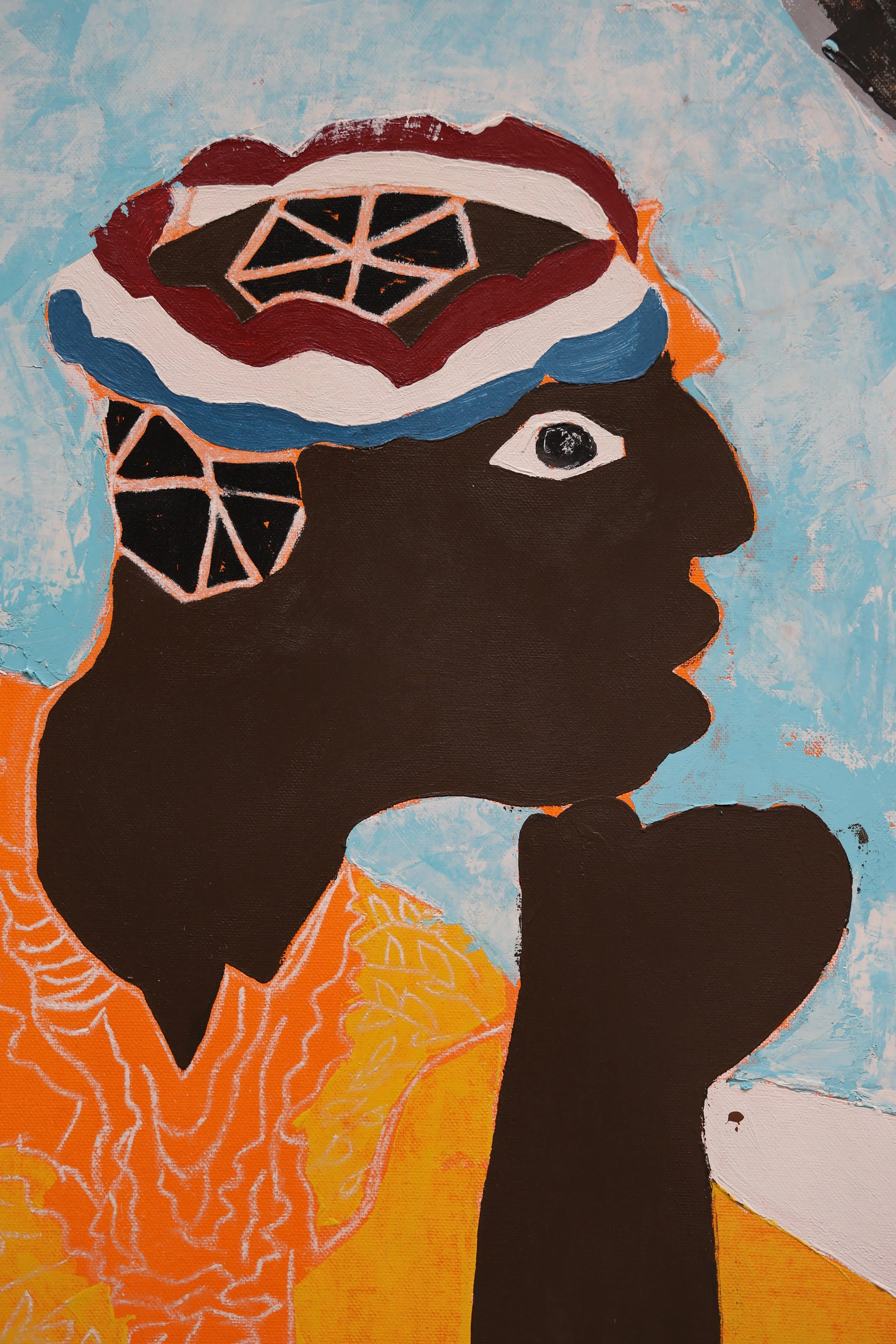
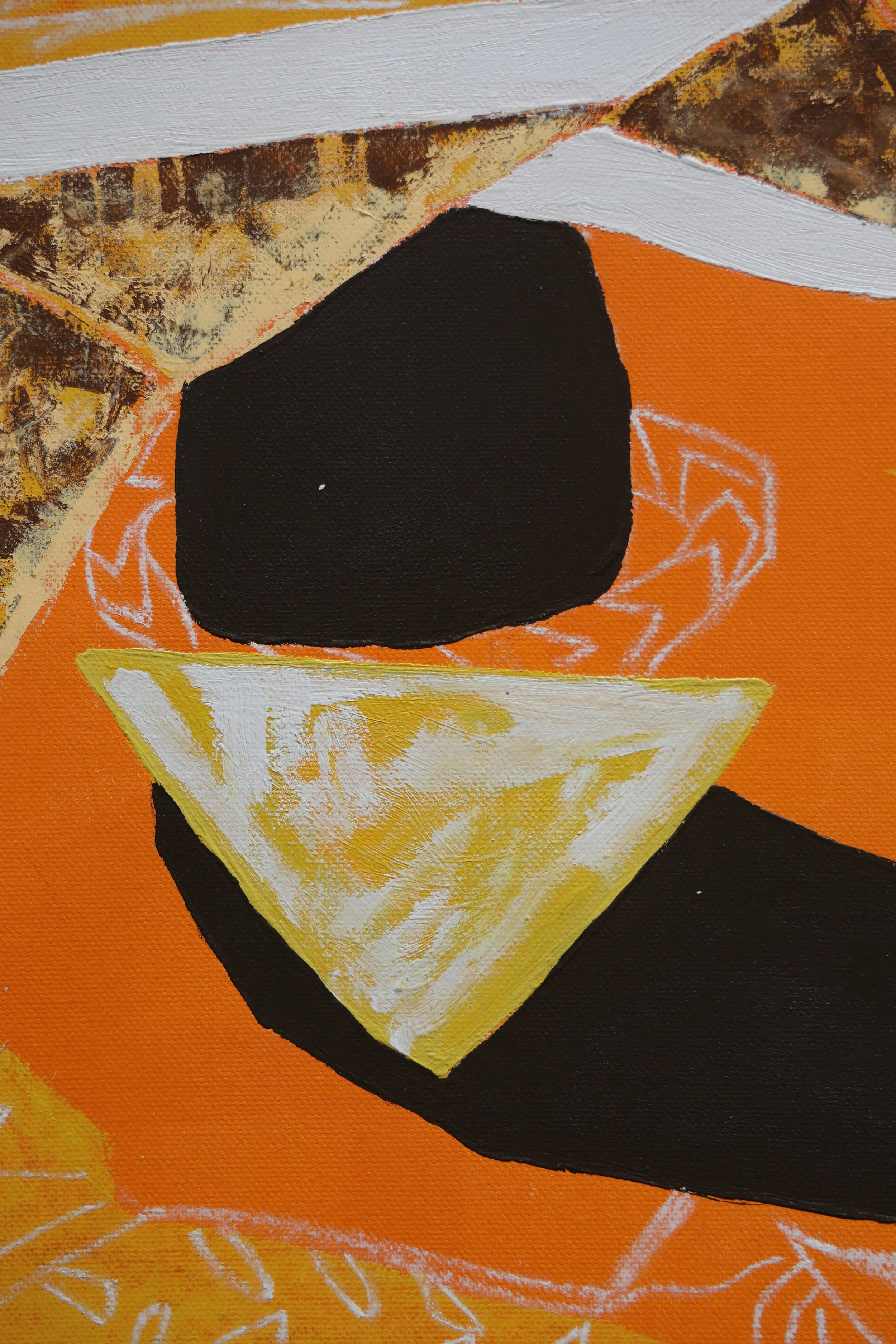
A male figure sits in the center of the canvas; He wears a colourful batakari of vibrant orange, yellow, white and brown colours. He wears an ornate coiffure, a headpiece and an amulet on his right arm. He sits on a highly stylized stool, which too sits on an orange and black Batakari lying on the floor. The figure sits in a position with his fist under his chin, deep in thought and ponder. His silhouette set against a blue and white sky. The scene of this iconic painting by Kweku Okokroko, riddled with symbolism-rich motif is from the Abrewa Posoposo epic. A literary work authored by Kweku Okokroko.
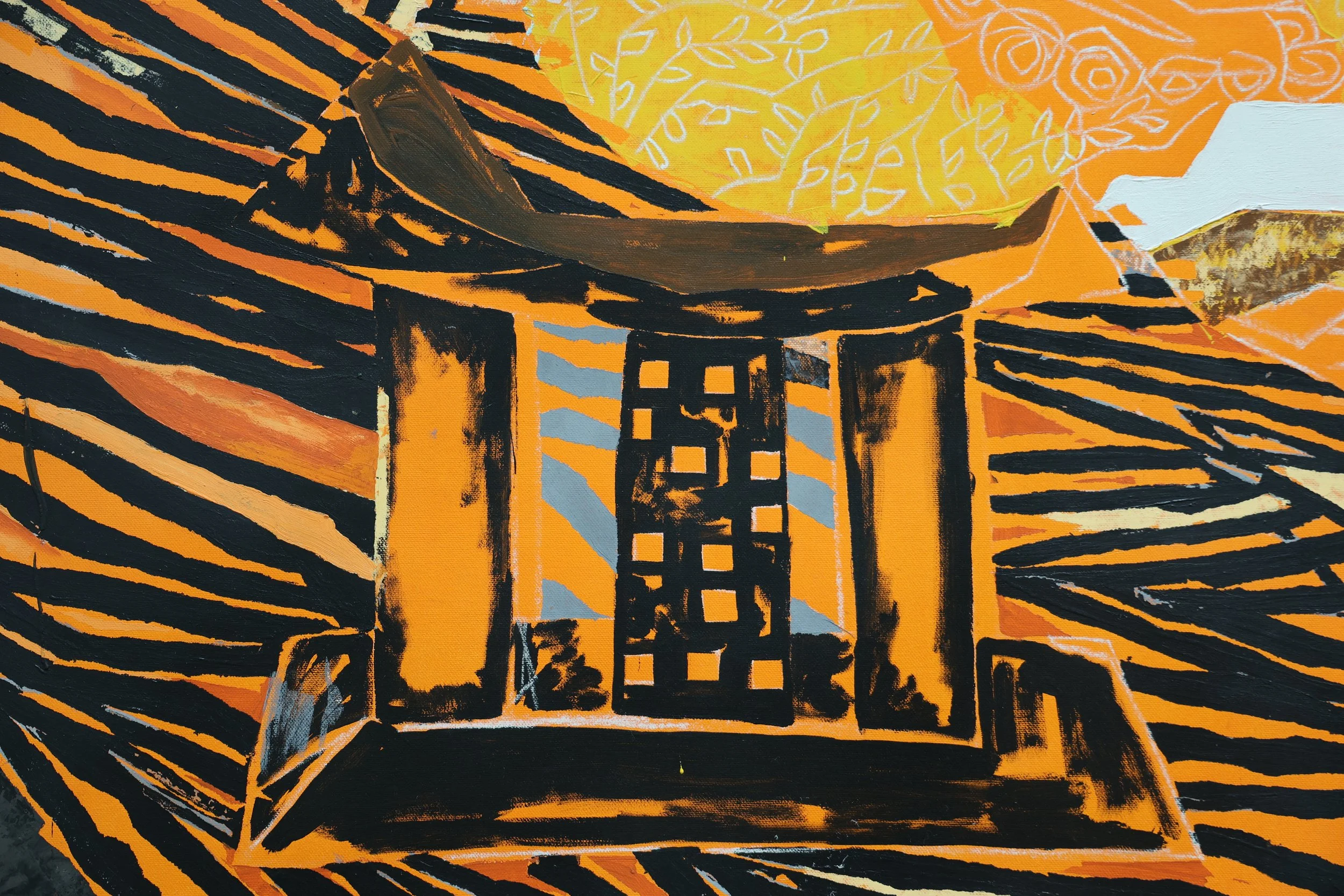
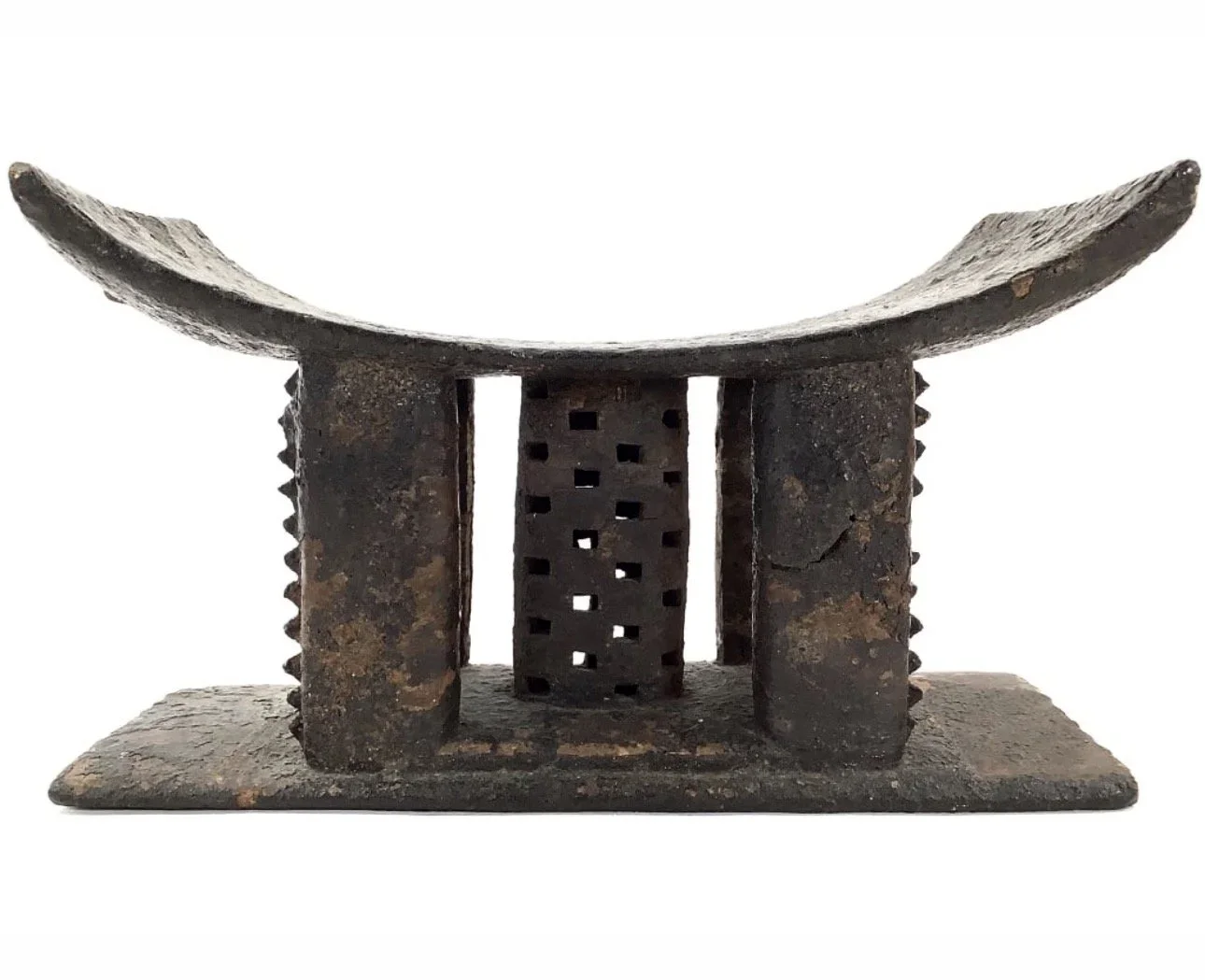
An Asante blackened ancestral shrine stool (nkongua tumtum). 15" L , 8.5' W. Ghana. This Asante blackened stool is arguably the most powerful ritualistic object within the collection. Such stools are believed to contain one or multiple ancestral spirits and embodies the entire history of the associated group of people. For the Akan, it is a form or historical document which brings the past into the present. It is an object blackened by the ritual application of blood from a member of the same lineage and later anointed with offerings of blood from castrated rams during special events. Other materials such as gunpowder and spider webs (references to war and the genealogical knowledge of women) are mixed in and smeared over the entire stool. In the kingdom of Asante, eggs with spider webs and kitchen soot of smoke from the hearth are mixed in. This consecrated shrine object not only represents the entire lineage from the original owner, but also the chieftaincy and succession of power. All kings and chiefs have at least 1 blackened stool. The stools are shrine objects that are not sat upon or ever put of the ground. Special rooms are built for such objects to be kept pure and out of general view. It is a place of prayers and sacrificial offerings to the ancestors. (ref: Michele Gilbert) Provenance: The estate collection of Dr. Roy and Sophia Sieber. Dr. Roy Sieber (1923-2001) is considered the founder of the discipline of African art history in the United States.