Akan Stools
The seats reserved for high-ranking notables are to this day a symbol of dignity and power. They are the main regalia of the Akan regents. Their role varies depending on whether they are a simple commodity or as a symbol of the entire state. There is a very special intimacy between the owner and the seat: the Asante wisdom says that there are no secrets between them. The seats are kept as memorabilia by the bereaved until no one can remember the previous owners.
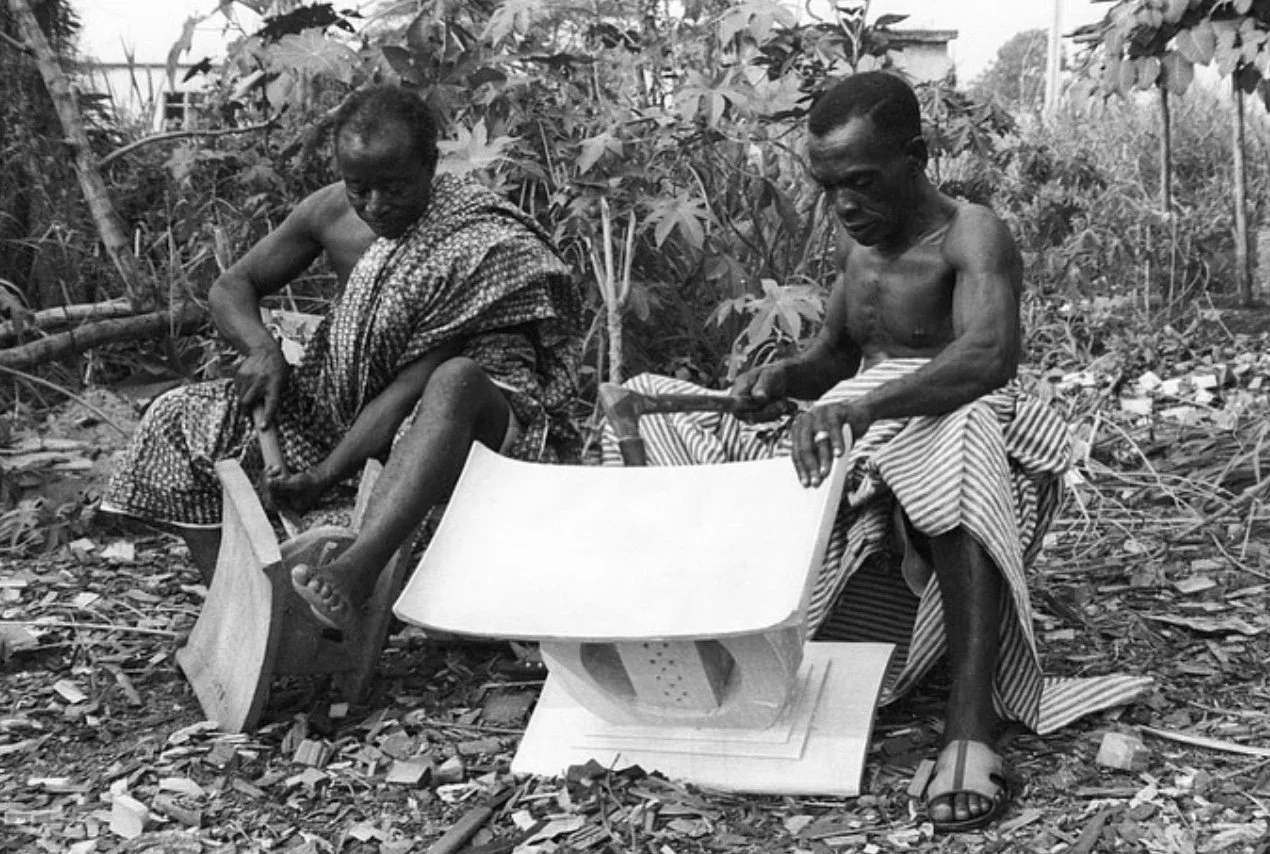
Carvers carving the Asante royal stools near Kumasi, ca. 1971. Eliot Elisofon
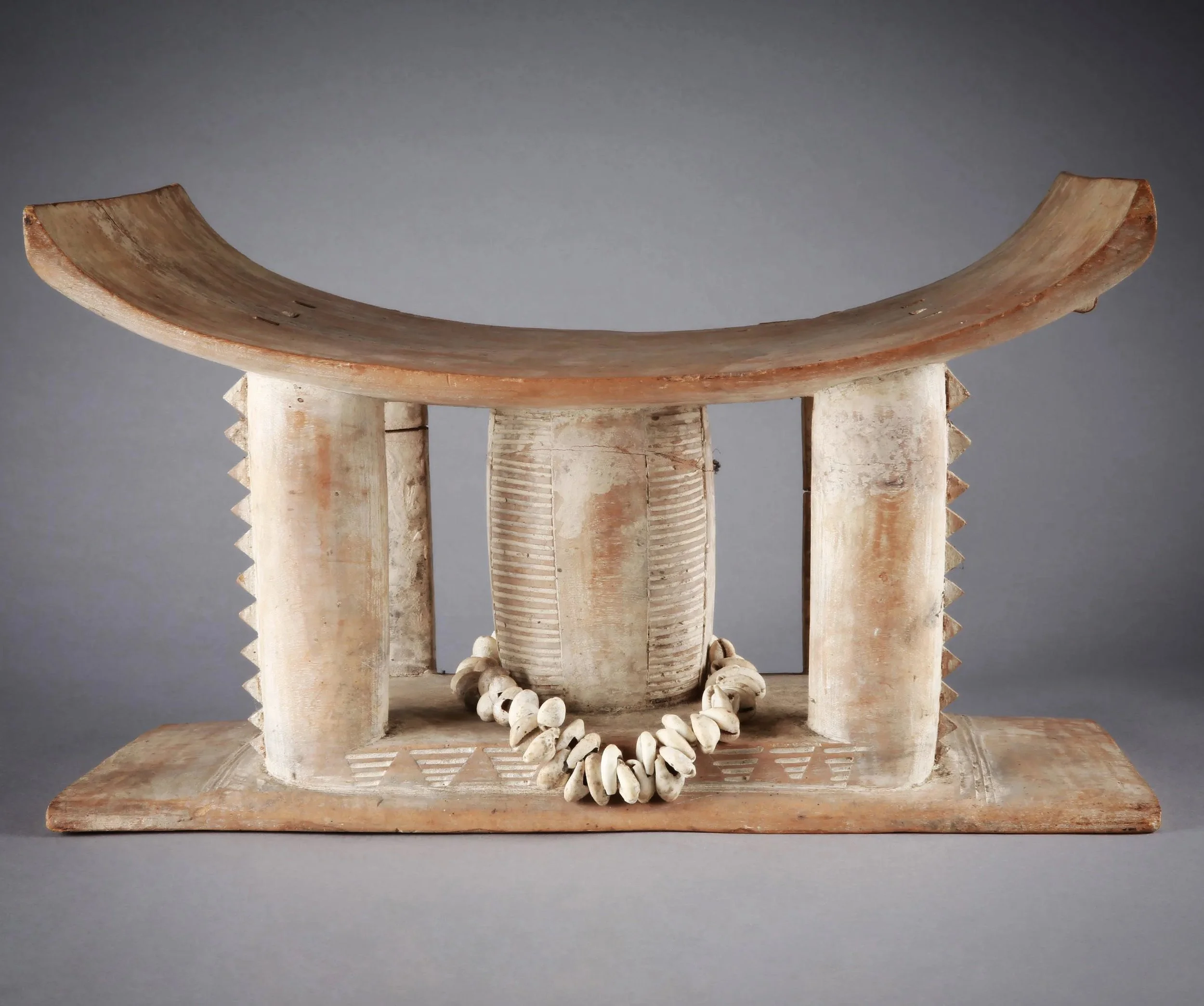
Asante stool, "mmaa gwa" Ghana. Wood, cowrie shells, kaolin pigment. H 30 cm. W 47.5 cm. From the estate of Dr. Andreas Vontobel (1931-2011), Waltalingen. Galerie Walu, Zurich (1986).


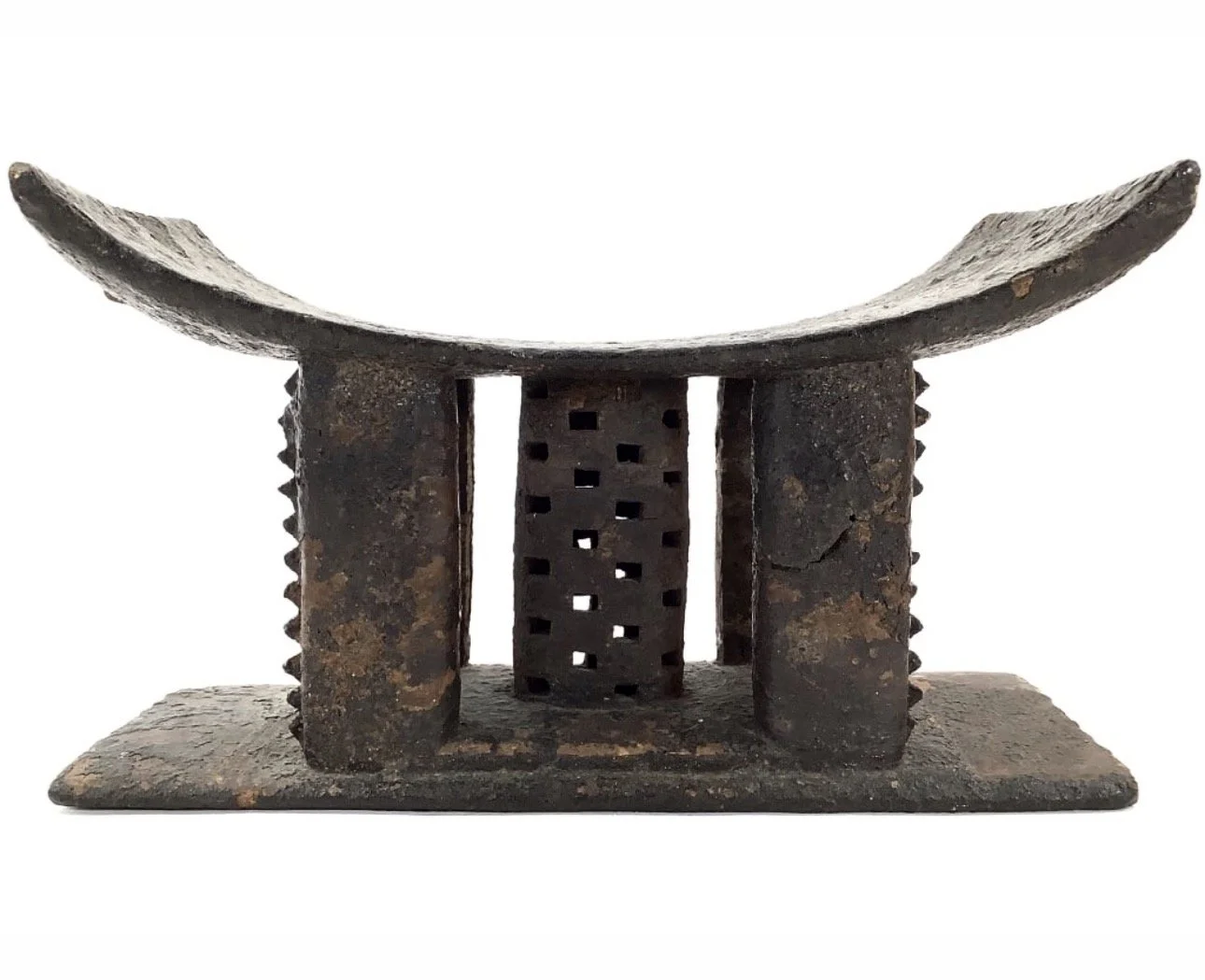
An Asante blackened ancestral shrine stool (nkongua tumtum). 15" L , 8.5' W. Ghana. This Asante blackened stool is arguably the most powerful ritualistic object within the collection. Such stools are believed to contain one or multiple ancestral spirits and embodies the entire history of the associated group of people. For the Akan, it is a form or historical document which brings the past into the present. It is an object blackened by the ritual application of blood from a member of the same lineage and later anointed with offerings of blood from castrated rams during special events. Other materials such as gunpowder and spider webs (references to war and the genealogical knowledge of women) are mixed in and smeared over the entire stool. In the kingdom of Asante, eggs with spider webs and kitchen soot of smoke from the hearth are mixed in. This consecrated shrine object not only represents the entire lineage from the original owner, but also the chieftaincy and succession of power. All kings and chiefs have at least 1 blackened stool. The stools are shrine objects that are not sat upon or ever put of the ground. Special rooms are built for such objects to be kept pure and out of general view. It is a place of prayers and sacrificial offerings to the ancestors. (ref: Michele Gilbert) Provenance: The estate collection of Dr. Roy and Sophia Sieber. Dr. Roy Sieber (1923-2001) is considered the founder of the discipline of African art history in the United States.
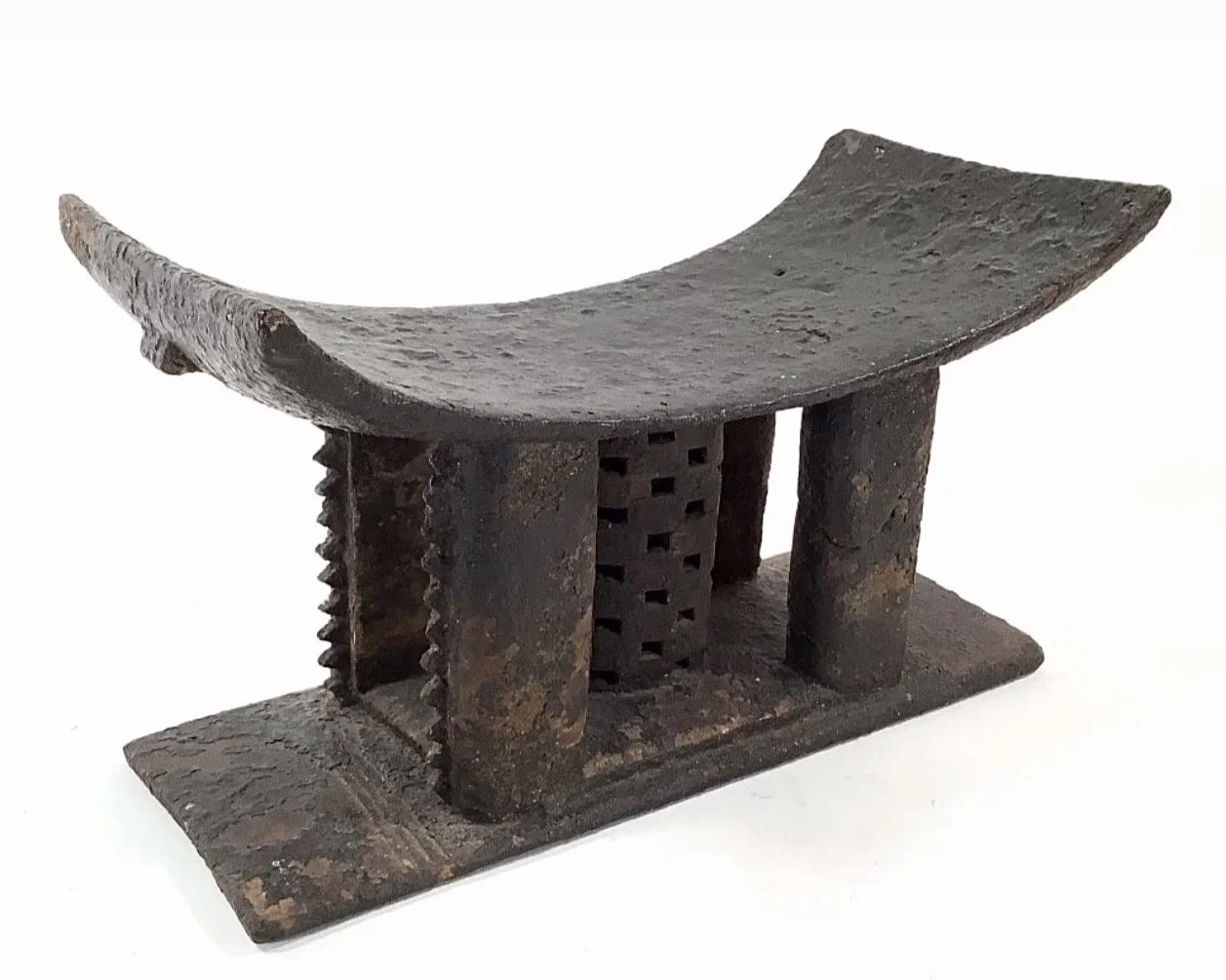
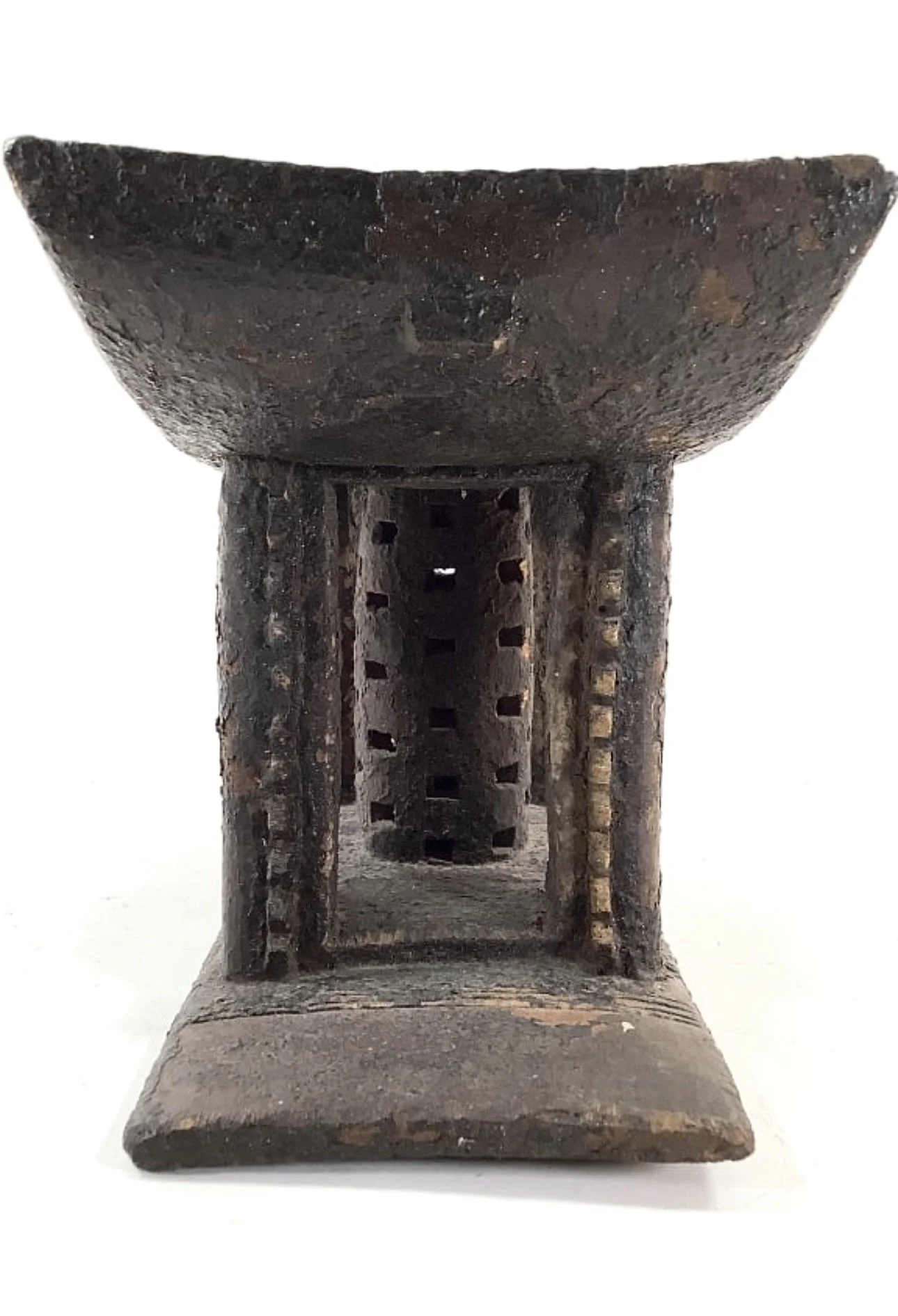
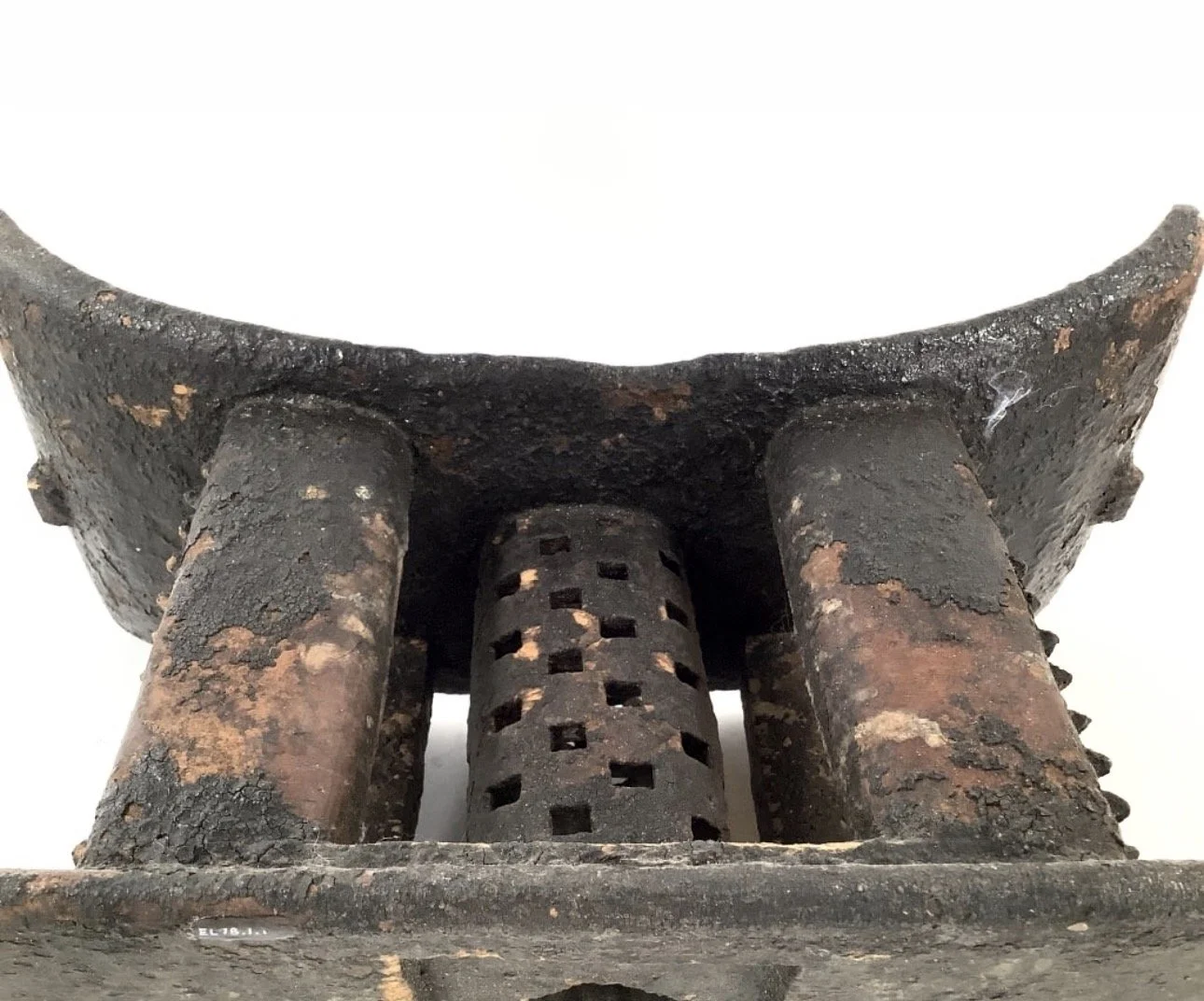
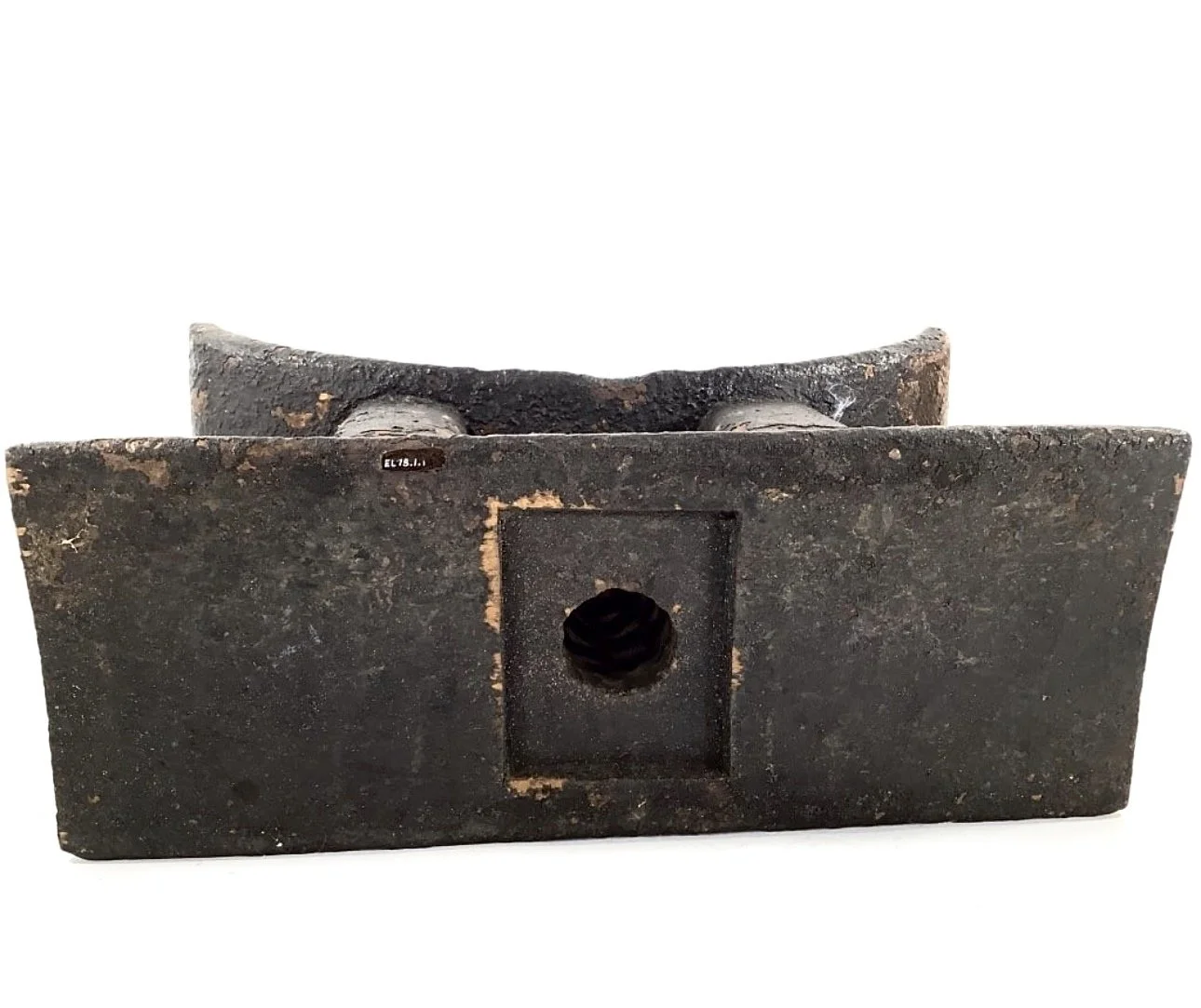
An Asante stool with a rare 6 ornate support column style. In this example, the central support column which is usually center of the stool is replaced with two columns, one to the front and one to the back leaving a center space between them. 20" x 10" x 13" H. Ghana.
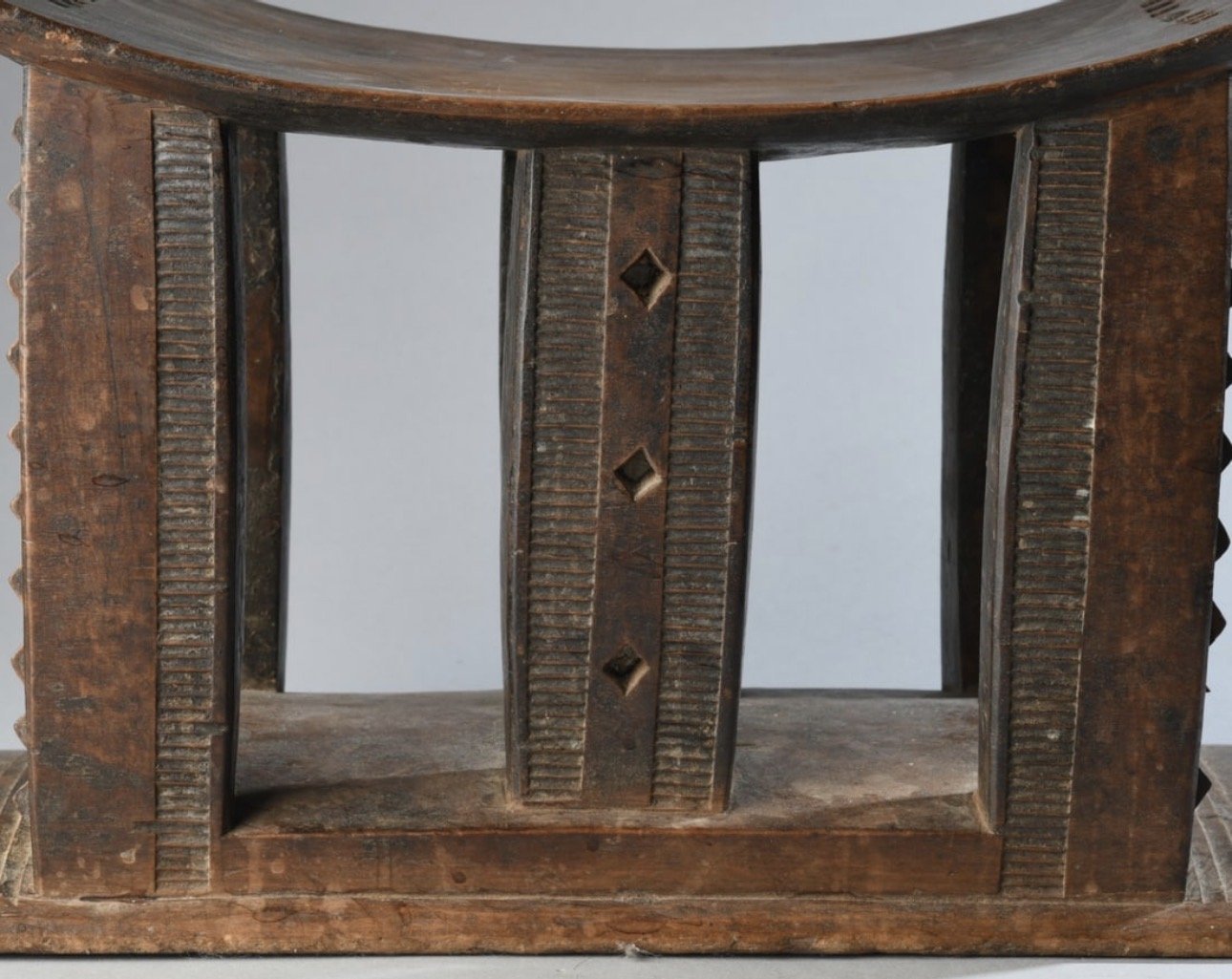
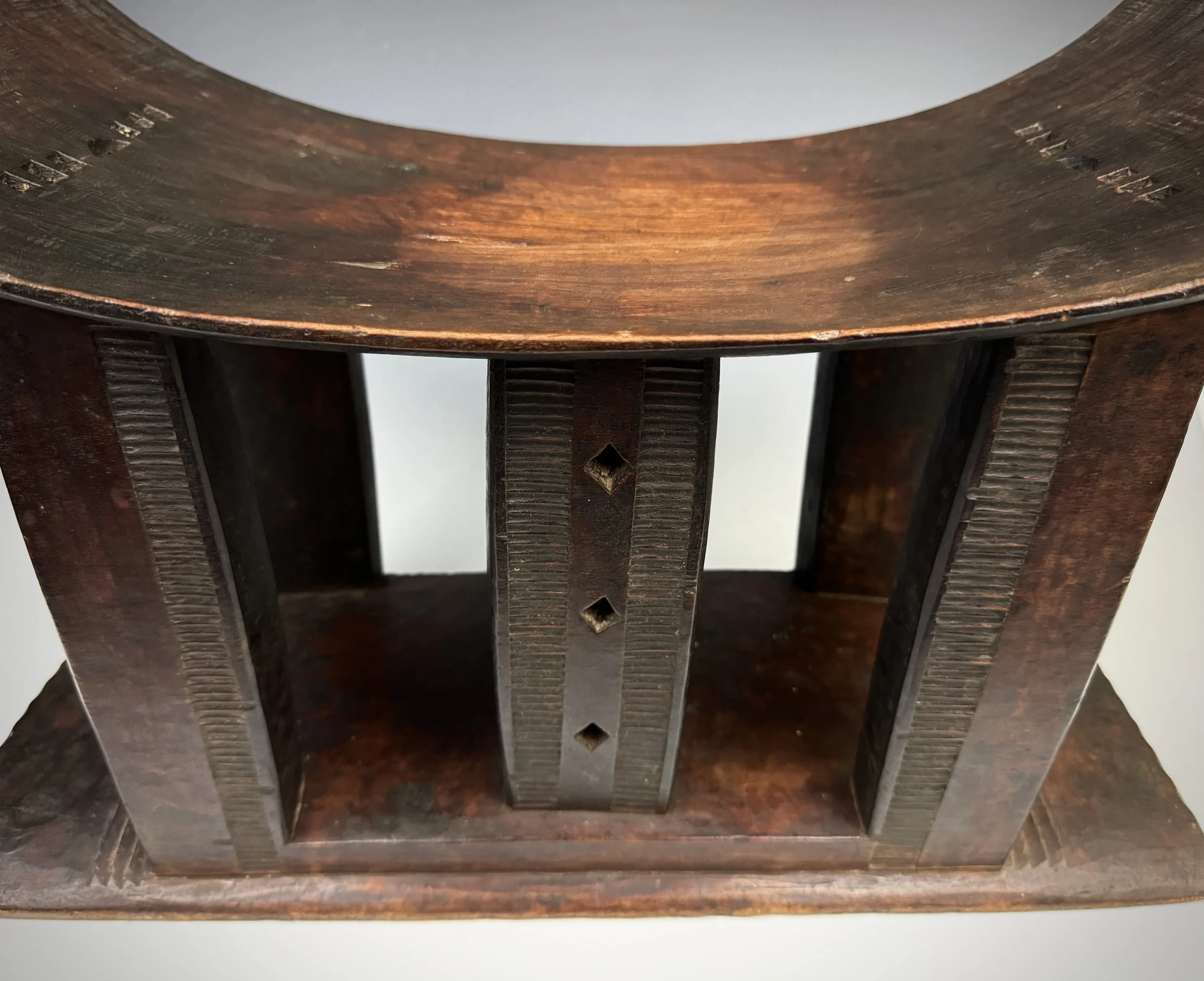
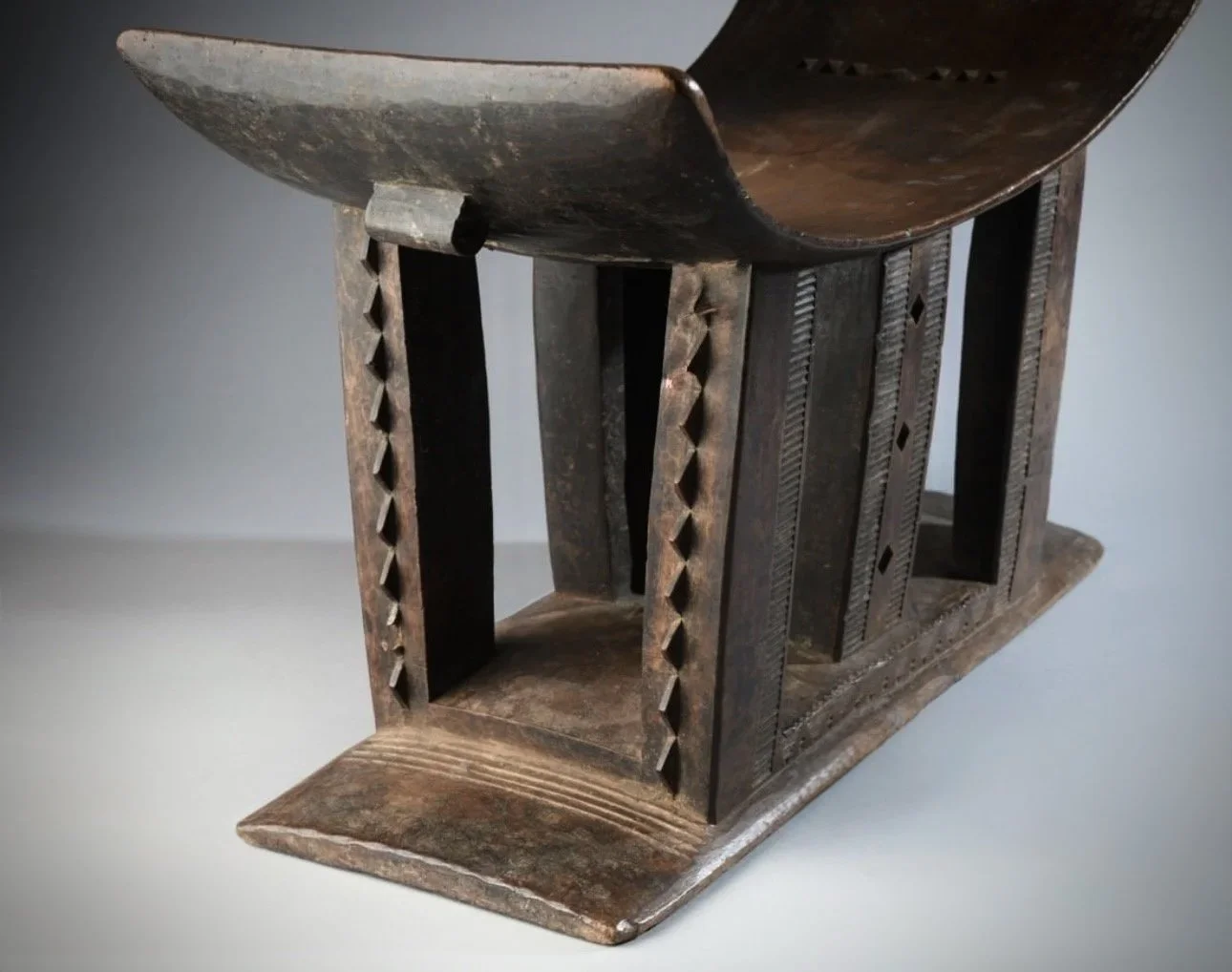
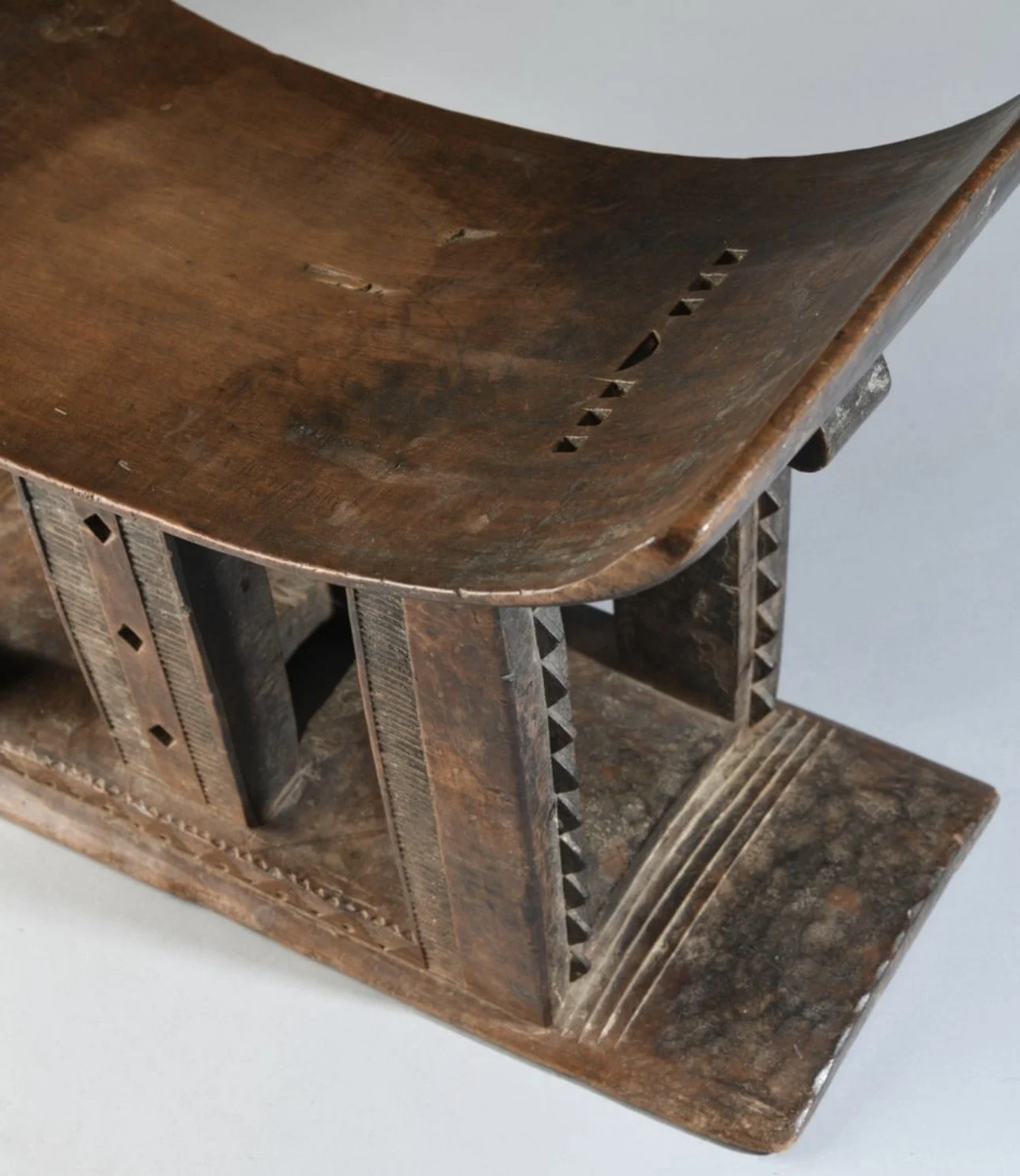

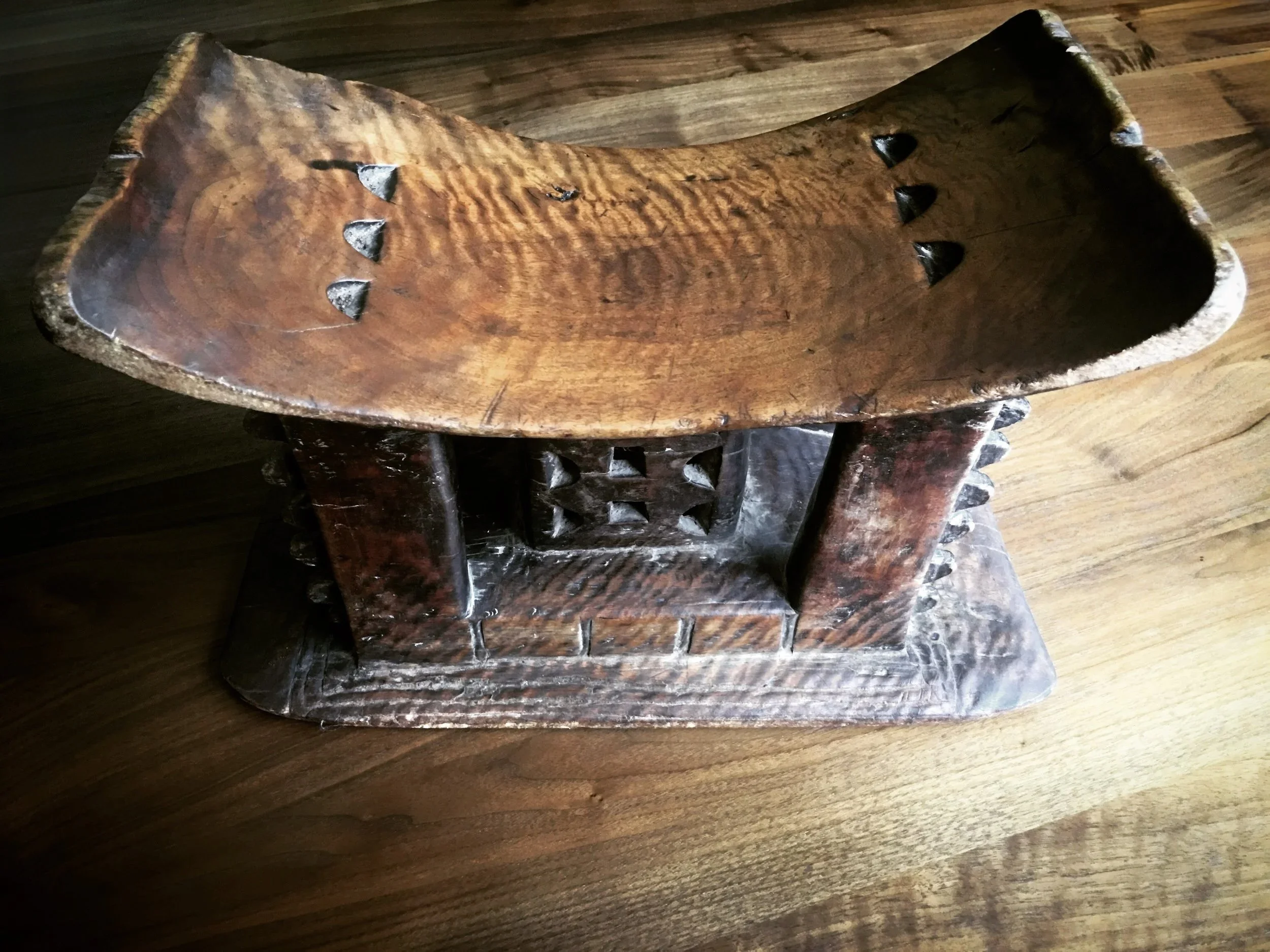

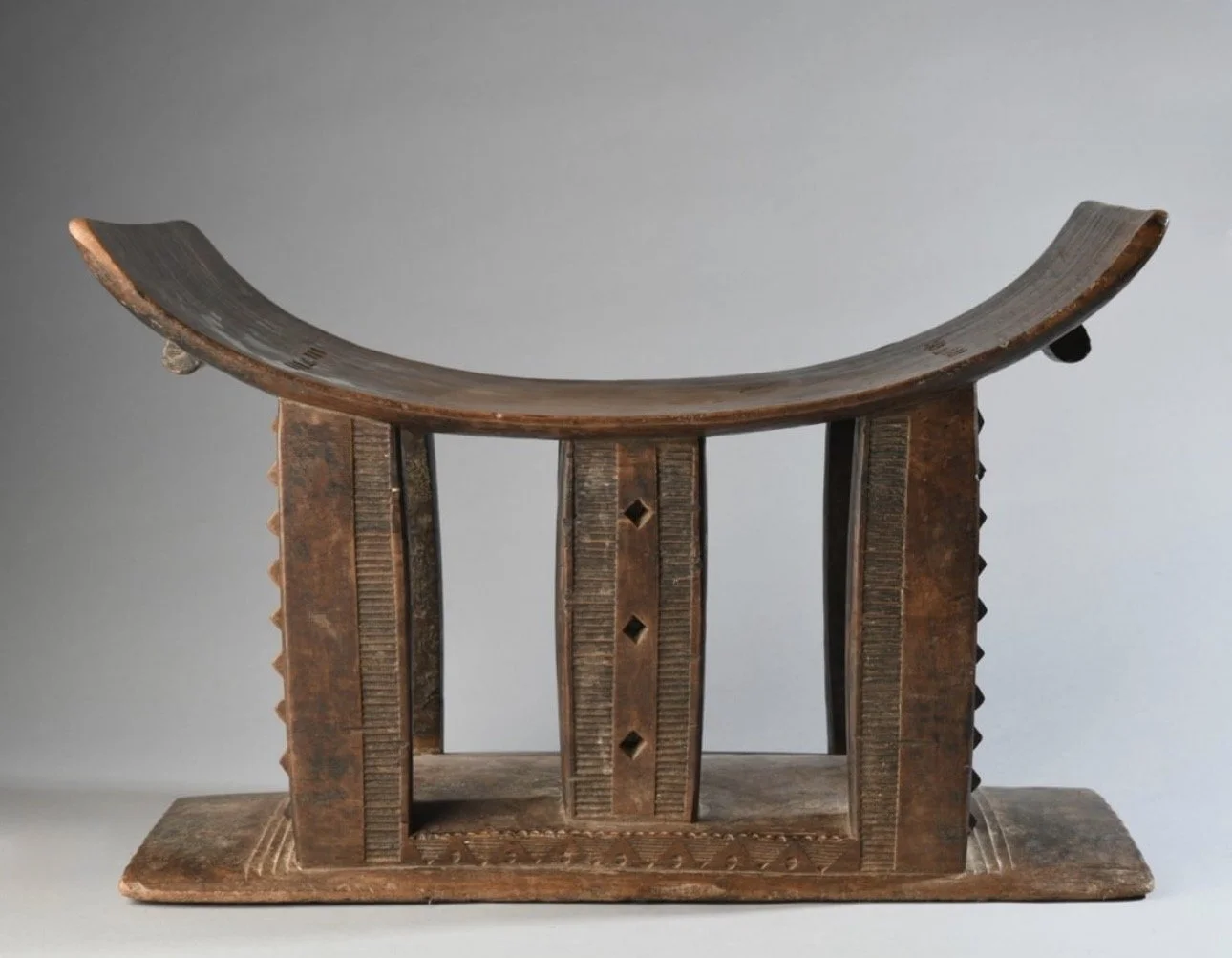
Asante “Mmaa dwa” or Woman’s stool. Collected in Kumasi, Ghana. “For the Asante, stools are integral components of social and political life. They are vital identity markers and sacred mediums for honoring and communicating with ancestors.” A stool was thought to contain the soul of its owner and, when not being used, it was put on its side to stop evil spirits sitting on it. Stools were carved from a single piece of wood and different design elements identified the type of stool. This stool is known as “Mmaa dwa” or woman’s stool. “In addition to the hierarchical symbolism found on various Asante regalia that relates to identification, the structure of the stool itself is very architectural; particularly the mmaa dwa which Nana Frempong Boadu, Otumfuo Chief Carver, described as one of the oldest designs in existence. Its cylindrical central support with a "checkerboard" pattern and four support pillars on each corner have striking parallels with conventional buildings; especially, the sleeping quarters of the Asantehene sketched by Bowdich. Firstly, the same "checkerboard" motifcarved into the columnar mmaa dwa support appears on the ovular entranceway to the king's chamber and images of other parts of the palace complex, taken at different points during the nineteenth century, reveal that the same design was used on almost all doors that led into private spaces. Secondly, every conventional Asante stool includes a series of "steps," called etuo abo, on the left and right-hand sides of the base that ascend toward the raised platform where the central support is located. These steps have no functional value, yet appear in the same place and in the same style on all asese dwa.” Source. Catherine Meredith Hale, Asante Stools and the Matrilineage .Collected in situ Kumasi, Ghana by Dean Hamerly.